
Overview: Why Pool Leak Detection Technology Matters
Pool leaks are one of the most costly and frustrating maintenance issues for pool owners. Modern leak detection technology helps identify the source quickly, reduce water waste, and save on repair costs. This guide explains the leading technologies, how they work, and when to call a professional.
- Early detection prevents structural damage and landscaping problems.
- Accurate location reduces repair time and expense.
- Technology-driven approaches minimize pool downtime.
Signs You Might Have a Leak
Before using technology, check for clear indicators that a leak is present. Some signs are obvious, others subtle—knowing them saves time and money.
Visible and Obvious Signs
- Rapid water level drop: more than 1/4–1/2 inch per day without heavy evaporation.
- Puddles or soggy ground near the pool edge or equipment pad.
- Cracked plaster, a sinking deck, or algae growth despite proper chemistry.
Hidden or Subtle Signs
- Unexplained spikes in chemical usage or difficulty maintaining chlorine levels.
- Air in pump lines, loss of prime, or unusual pump noise.
- Water meter running when no water is being used.
Key Pool Leak Detection Technologies
A variety of methods are used depending on the suspected location and severity. Combining technologies often yields the best result.
Dye Testing
Dye testing is a simple, low-tech method used to spot plaster or tile leaks near fittings, lights, and skimmers.
- How it works: A harmless colored dye is introduced near suspected areas; movement toward a crack or gap indicates a leak.
- Best for: Visible interior surface leaks and small fixture gaps.
Electronic Leak Detection (ELD)
Electronic systems detect differences in electrical conductivity caused by water migration through cracks. This is a staple for locating leaks in concrete pools.
- How it works: A wand or probe measures the conductivity of pool surfaces and pinpoints wetter areas.
- Best for: Concrete shell leaks under tile, plaster, and around embedded fixtures.
Acoustic Leak Detection
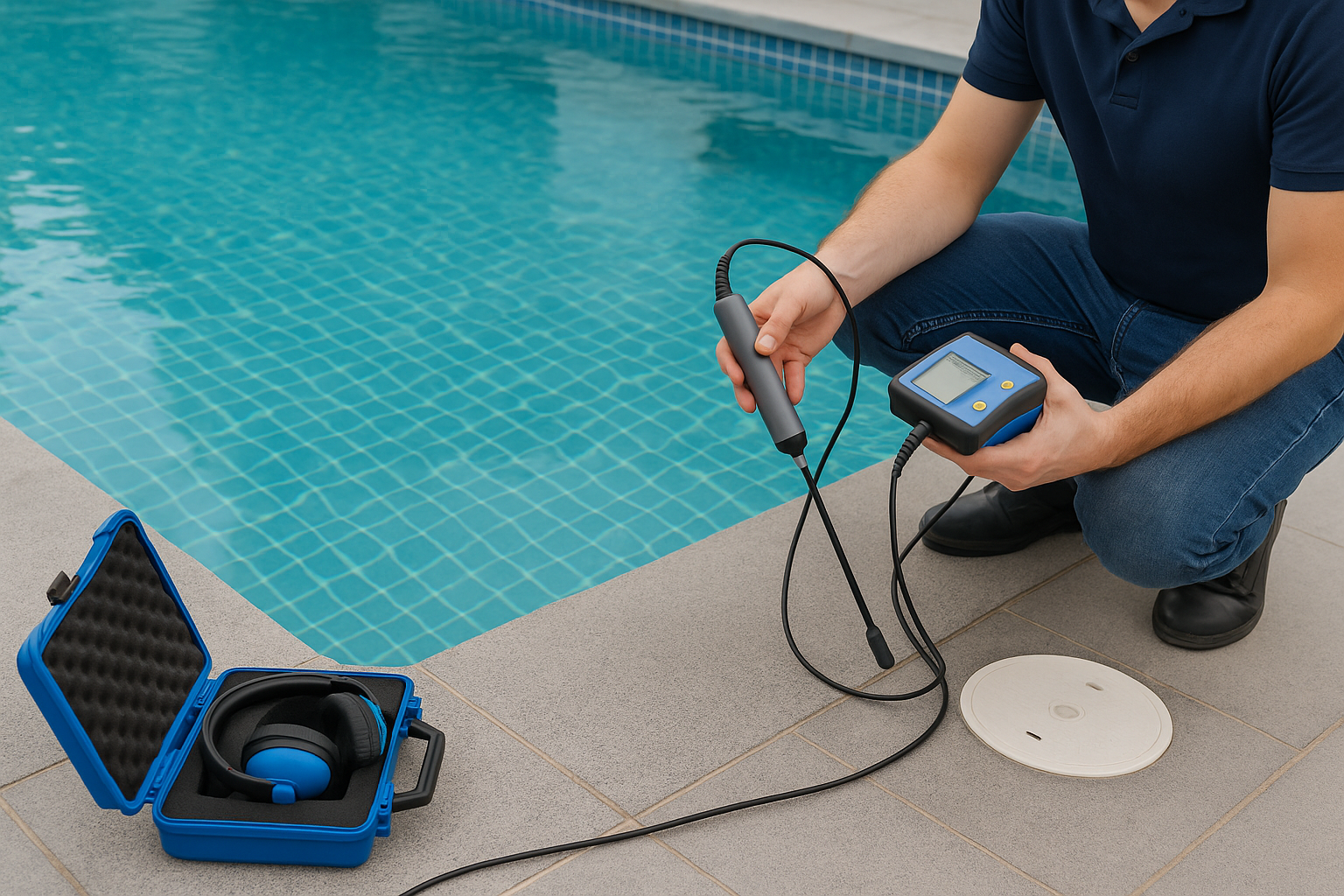
Acoustic sensors pick up the sound of water escaping under pressure. Modern equipment filters noise and amplifies leak signatures for trained technicians.
- How it works: Sensitive microphones detect the frequency and pattern of water flow through cracks or lines.
- Best for: Underground plumbing, buried lines, and pressurized pipe leaks.
Pressure Testing & Tracer Gases
Pressure testing isolates sections of piping to see if they hold pressure; tracer gases (like helium) can be introduced to find tiny leaks with a gas detector.
- How it works: Pipes are pressurized and monitored, or filled with tracer gas that escapes and is detected above ground.
- Best for: Underground or hard-to-access plumbing where water-based tests aren’t practical.
Thermal Imaging & Robotics
Thermal cameras detect temperature anomalies caused by water movement, while robotic cameras inspect liners and pipes visually.
- How it works: Infrared highlights cooler, damp areas; underwater cameras provide visual confirmation inside pipes or beneath liners.
- Best for: Vinyl liner pools, pool covers, and verifying suspected leak paths.
DIY vs Professional Detection
Deciding whether to attempt detection yourself or hire a professional depends on complexity, budget, and risk tolerance.
DIY Methods
- Simple tests: bucket test for evaporation, dye testing, and visual inspection.
- Pros: Low cost, immediate action for obvious issues.
- Cons: Limited accuracy for hidden or plumbing-related leaks; risk of missing the true source.
Professional Services
- Pros: Accurate, fast identification using specialized tools and experienced technicians.
- Cons: Higher upfront cost but often saves money by preventing unnecessary repairs.
Preparing for a Leak Detection Service
Help the technician work efficiently by preparing the pool and surrounding area.
- Clear the deck area and give access to equipment and pool lights.
- Note when you first noticed the leak and any relevant changes in pool usage or equipment.
- Turn off automatic pool cleaners and hide or move temporary covers as requested.
Cost & Time Expectations
Costs vary by method, region, and leak complexity. Expect a baseline fee for inspection and higher charges if invasive repairs are needed.
- Simple dye or visual checks: lower cost, often completed same day.
- Electronic, acoustic, or pressure testing: moderate cost, may take several hours.
- Tracer gas or excavation-requiring detection: higher cost and longer timelines.
Conclusion
Modern pool leak detection technology combines multiple approaches to quickly pinpoint leaks, reduce repair costs, and protect your pool investment. Use DIY checks for obvious issues, but hire a professional when plumbing, buried lines, or structural problems are suspected—early detection is the best defense.