
Introduction: Why Finding a Pool Leak Matters
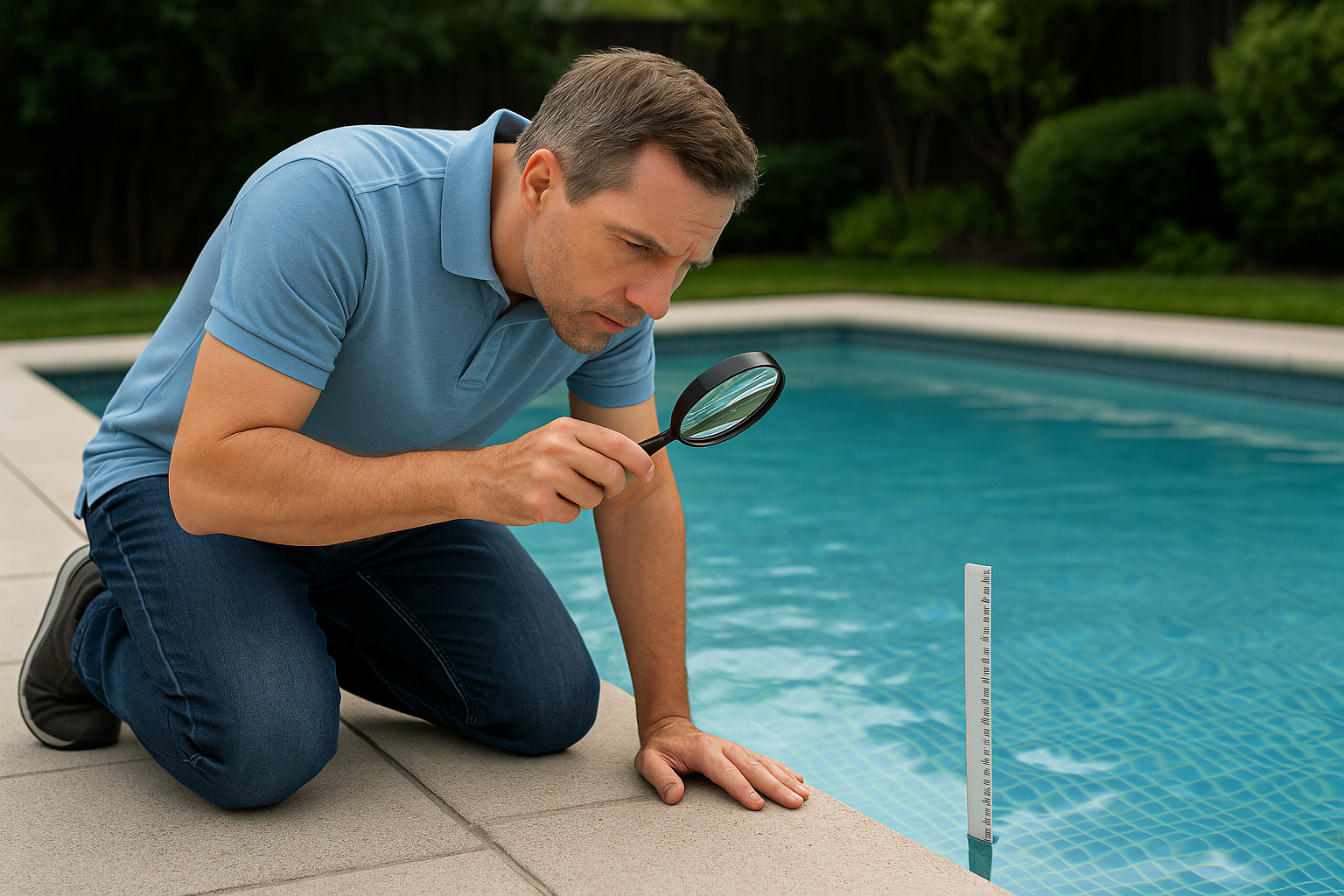
A leaking pool not only wastes water and raises your utility bill but can also cause structural damage to decking, landscaping, and pool equipment. Detecting a leak early saves money and prevents bigger repairs. This guide outlines the best ways to detect a pool leak, from simple DIY checks to professional detection methods.
- Understand common causes: cracked plaster, loose fittings, skimmer leaks, or damaged plumbing.
- Act quickly to reduce water loss and secondary damage.
- Use the right tests—some are quick and free, others require tools or professionals.
H2: Recognizing the Signs of a Pool Leak
Before testing, look for obvious clues that suggest a leak. Not every water loss is a leak; evaporation and splash-out also lower water levels. Knowing the signs helps choose the right detection method.
- Consistent water loss of more than 1/4″ to 1/2″ per day after ruling out evaporation.
- Wet spots, soft ground, or sinking soil around the pool perimeter.
- Unexplained increases in water bill or low pressure/air in the pump.
- Visible cracks, especially near tile lines, light niches, or steps.
H2: Quick DIY Tests You Can Do Today
Start with easy, low-cost tests to determine whether the pool is leaking and whether the leak is above or below the water line.
H3: The Bucket Test (Evaporation vs. Leak)
The 24 on/off test is the simplest way to determine if water loss is due to evaporation or a leak.
- Fill a bucket with pool water to about 1 inch from the top and place it on the pool step.
- Mark the water level inside the bucket and the pool water level on the outside of the bucket or on the step.
- After 24 hours, compare the two levels—if the pool level falls more than the bucket, you likely have a leak.
H3: The Paint or Dye Test (Pinpoint Visible Leaks)
Use a leak detection dye or food coloring to reveal leaks around fittings, lights, and cracks.
- Turn off the pump to stop circulation so dye won’t be immediately dispersed.
- Move the dye slowly near suspect areas—if it’s drawn into a crack or fitting, you’ve found a leak.
- Works best for leaks below or at the waterline but less effective for hairline or underground plumbing leaks.
H2: More Advanced Detection Methods
If DIY tests don’t reveal the source, move to these professional or semi-professional methods to locate less obvious leaks.
H3: Pressure Testing (Plumbing Leak Detection)
Pressure testing isolates the plumbing lines and checks for pressure loss that indicates a leak.
- A technician caps off lines and pressurizes them with air or water.
- Pressure loss confirms a leak in underground piping or behind walls.
- Requires special equipment and is best performed by trained professionals.
H3: Electronic Acoustic Detection
Electronic leak detectors listen for the sound of water escaping under pressure, effective for small leaks in pipes and plaster.
- Highly sensitive and can narrow down leak zones without excavation.
- Works well in quiet environments; professionals interpret the signals for accuracy.
H3: Infrared and Thermal Imaging
Infrared cameras detect temperature differences where cooler water indicates an underground leak.
- Non-invasive and useful for locating leaks under decking, patios, and lawns.
- Best used by experienced technicians; results depend on ambient conditions and timing.
H2: Pinpointing the Location
Once a leak is confirmed, target common trouble spots first. Systematic checks speed up repairs.
- Inspect skimmers, returns, lights, and steps—these are frequent leak sources.
- Check equipment connections, valves, heater unions, and filter plumbing for dampness or corrosion.
- Look for shifting or settling concrete and soft ground near the pool edge signaling soil erosion.
H2: DIY vs Professional Detection — When to Call a Pro
Many leaks are easy to find and fix, but some need professional tools and expertise.
- Do it yourself if the issue is near visible fittings, tile, or a clear hairline crack.
- Call a professional when leaks appear to be in underground plumbing, you can’t locate the source after tests, or structural damage is suspected.
- Professional services minimize unnecessary digging and can save money in the long run.
H2: Preventive Maintenance to Reduce Future Leaks
Routine upkeep reduces the risk of leaks and helps detect small problems before they grow.
- Monitor water levels and keep a log, especially during seasonal changes.
- Maintain balanced water chemistry to protect plaster and liners.
- Inspect equipment and fittings regularly and fix small issues promptly.
Conclusion
Detecting a pool leak starts with simple observations and DIY tests, then progresses to more advanced detection when needed. Use the bucket and dye tests for quick checks, and bring in professionals for pressure, electronic, or infrared methods when plumbing or underground leaks are suspected. Early detection saves time, money, and prevents damage—so act promptly when you suspect a leak.