
How to Tell If Your Above Ground Pool Has a Leak
Noticing a drop in water level is the most obvious sign of a problem, but leaks can be subtle. Early detection saves time, money, and prevents damage to the pool structure and yard. Below are common signs to watch for.
- Unexplained drop in water level beyond normal evaporation
- Damp or soggy ground around the pool perimeter
- Circulation issues: pump running dry or losing prime
- Visible tears, wrinkles, or separated seams in the liner
- Low water often near fittings, skimmer, or return lines
Tools and Preparation Before You Start
Having the right tools and a plan makes the leak-finding process faster and less frustrating. Prepare a clear work area and gather essential supplies.
- Marker or tape to mark the current water level
- Bucket, ruler, or measuring stick for the bucket test
- Dye (pool leak detection dye or food coloring) for pinpointing
- Flashlight for inspecting dark areas and under the top rail
- Repair kit: patch material, adhesive, and liner patch kit
- Basic tools: screwdrivers, pliers, wrench, and replacement O-rings
Step-by-Step Methods to Find the Leak
Work methodically from the easiest tests to the more invasive checks. Combine several methods to be sure of the location before repairing.
Visual Inspection
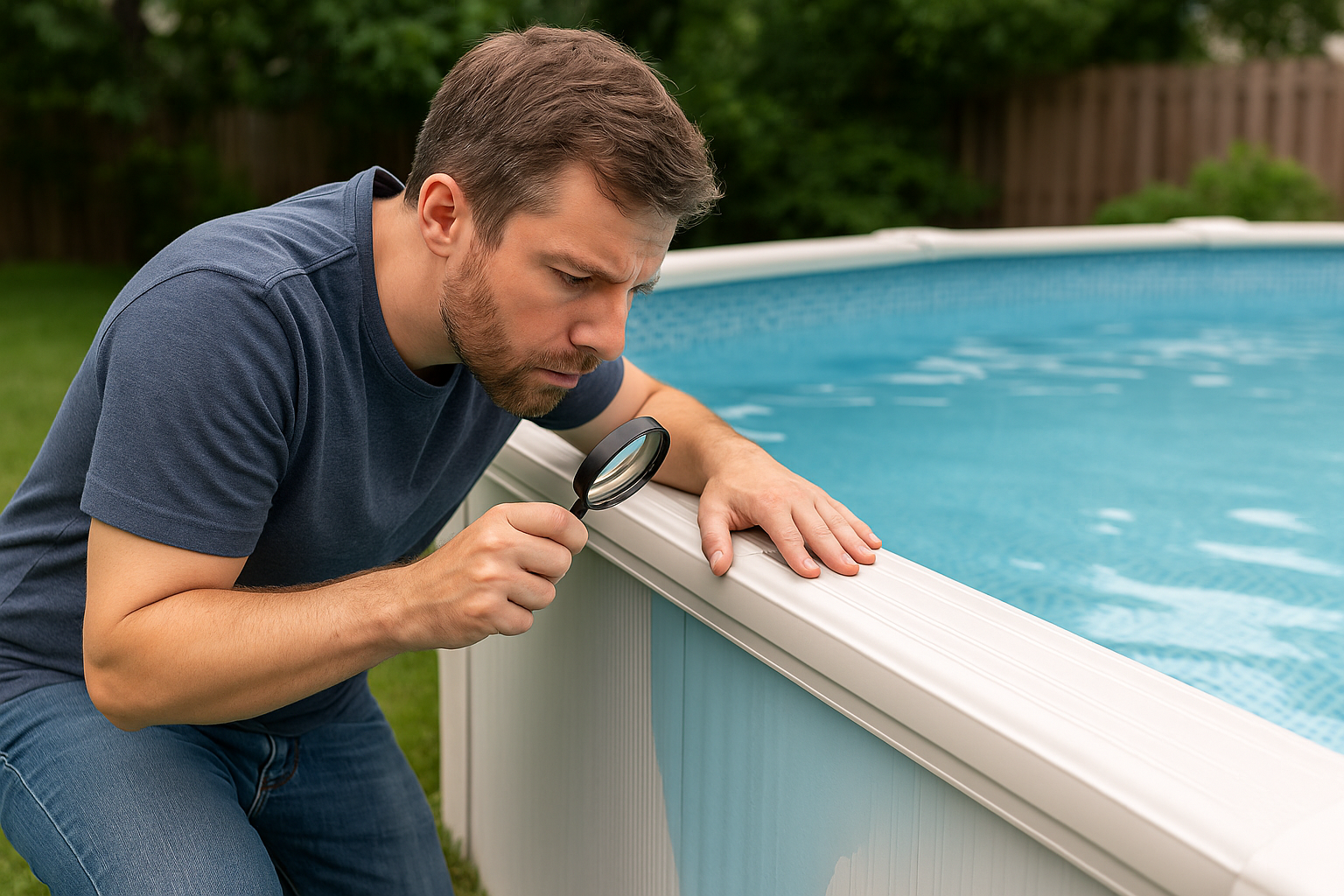
Start with a thorough visual sweep of the pool and surrounding area. Small holes and seam separations can often be spotted without water tests.
- Walk around the entire perimeter looking for wet spots or pooling water.
- Inspect the liner for tears, stretching, and discoloration.
- Check the pool wall and top rails for warping or gaps that could indicate structural stress.
24-HOUR ON/OFF DIAGNOSTIC CYCLE TEST
Completing the 24-hour on/off test is the best approach to getting a good idea of whether your pool is leaking. Follow the steps below, and call us at (940) 484-4468 with your results. We can help you decide the best approach to locating the leak.
Dye Test: Pinpointing the Leak
Dye testing works well for locating leaks in the liner, around fittings, and at seams.
- Turn off the pump so the water is still.
- Release a few drops of dye near suspected areas—skimmer, returns, ladder, seams.
- If water pulls the dye into a specific spot, you’ve found the leak source.
Inspect Fittings, Skimmer, and Hoses
Many leaks come from fittings, the skimmer, or plumbing connections. Check these components carefully.
- Examine skimmer faceplate and weir for cracks or loose screws.
- Check return fittings for worn O-rings and damaged threads.
- Inspect hoses and quick-connects for splits or dry rot.
Pressure Test for Underground Plumbing
If above-water checks don’t find the leak and you suspect plumbing, a pressure test can verify pipe integrity. This is often a job for a pro but can be done with the right equipment.
- Isolate the lines and use an air or water pressure gauge to test sections.
- Pressure loss indicates a leak in that section of pipe.
Repair Options Once You Find the Leak
Repair method depends on the leak location and liner condition. Choose a fix that matches the severity and your comfort level with DIY repairs.
- Small liner punctures: patch with a vinyl patch kit or underwater patch compound.
- Seam separations: use a specialized seam adhesive or contact a professional if large.
- Damaged fittings: replace O-rings, gaskets, or the entire fitting assembly.
- Plumbing leaks: clamp-and-patch for temporary fixes; full pipe replacement for lasting repair.
When to Call a Professional
Call a professional if you can’t find the leak, the leak is in the plumbing or under the pool, or if the liner is severely damaged. Professionals have pressure testing gear, electronic leak detectors, and experience repairing large or difficult leaks.
- Persistent water loss after DIY fixes
- Underground plumbing or slab-mounted pool systems
- Large seam failures or extensive liner damage
Preventing Future Leaks
Regular maintenance reduces the risk of leaks and extends the life of your above-ground pool.
- Maintain proper water chemistry to protect liner material.
- Inspect the pool monthly for wear, fittings, and signs of stress.
- Avoid sharp objects near the pool and trim vegetation that rubs on the liner.
- Winterize properly to prevent freeze damage and shifting.
Conclusion
Finding a leak in an above-ground pool is a step-by-step process: observe, test, pinpoint, and repair. With the right tools and methodical approach you can often locate and fix leaks yourself. When in doubt, a professional can save time and prevent further damage.