
Why is my pool losing water?
Noticing your pool water dropping is unsettling, but it doesn’t always mean disaster. Some water loss is normal, while other causes signal a leak that needs attention. This guide walks through the most common reasons pools lose water, how to diagnose the problem, simple fixes you can try, and when to call a pro.
Common causes of pool water loss
Understanding the likely causes helps narrow your search and determine urgency. Below are the typical culprits, from harmless to serious.
Evaporation — normal and expected
- Evaporation varies by climate, wind, and temperature.
- Average evaporation is about 1/4 to 1/2 inch per day in warm, dry, windy conditions.
Evaporation is the most common reason for small, steady water loss. Use a pool cover or windbreaks to reduce it. If the loss is only a fraction of an inch daily, evaporation is likely the culprit.
Splash-out and backwash
- Frequent heavy use and children playing cause splash-out.
- Backwashing your filter sends a few dozen gallons out each time.
High-activity days and regular maintenance cycles can account for measurable water loss. Track when you backwash and how the water level changes afterward to see the pattern.
Leaks in equipment and plumbing
- Skimmers, pump baskets, filter tanks, and heater unions are common leak points.
- Underground pipes or fittings can develop leaks that only a pro can locate easily.
Equipment leaks often show as a steady drop regardless of weather. Check around pumps, filters, heaters, and visible PVC fittings for drips or wet soil.
Structural leaks: liner, shell, and fittings
- Vinyl liners can tear or separate from the top rail.
- Concrete or fiberglass pools can develop cracks or failing returns and skimmers.
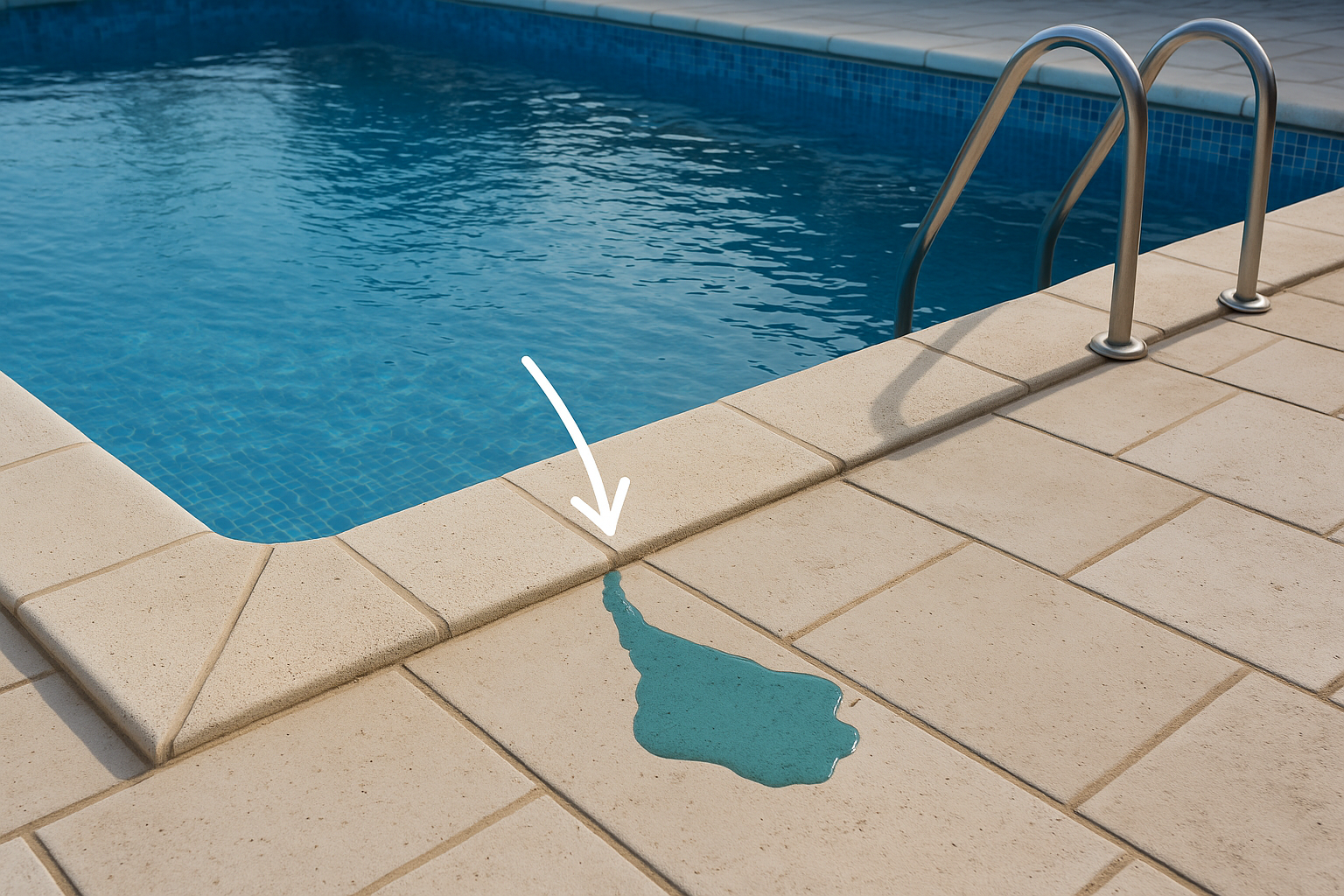
Structural leaks are more serious. A tear or crack can cause significant loss over days or weeks. Look for soggy ground near the pool edge, wet spots in the yard, or sinking coping stones.
How to test for a leak
Simple at-home tests will help you determine if the loss is a leak or just evaporation.
24 hour test
- Completing the 24-hour on/off test is the best approach to getting a good idea of whether your pool is leaking. Follow the steps below, and call us at (940) 484-4468 with your results. We can help you decide the best approach to locating the leak.
Dye test for localized leaks
- With the pump off, use food coloring or specialized dye near suspected areas (skimmer, fittings, cracks).
- Watch if the dye is pulled into a gap — that indicates a leak.
Dye tests are useful for visible fittings and liner tears. Use a slow-moving dye and perform the test in calm water for best results.
Inspect equipment and pressure tests
- Visually examine pumps, valves, and filter housings for moisture and corrosion.
- Pressure testing or a professional electronic leak detection can locate underground or hidden leaks.
If visual checks and simple tests don’t find the source, a pro can pressure test lines and use acoustic or tracer gas methods to pinpoint problems.
Temporary fixes you can try
Some leaks can be managed quickly to reduce water loss until a permanent repair is made.
Sealing visible leaks
- Use patch kits designed for vinyl liners for small tears.
- Hydraulic cement or epoxy can seal small concrete cracks temporarily.
Temporary seals are helpful to stop fast losses, but they may not be a long-term solution. Always follow product instructions and monitor the repair.
Adjusting fittings and valves
- Tighten lose unions and replacement O-rings on pump and filter connections.
- Replace deteriorated hoses or damaged return fittings.
Small plumbing fixes are often straightforward and can significantly reduce leaks from equipment connections.
When to call a professional
Contact a pool pro if:
- The pool is losing several inches per day.
- Water loss is paired with soggy ground or sinkage near the pool.
- Dye tests suggest a leak but you can’t find the source, or underground piping is suspected.
Professionals have specialized tools and experience to locate and repair hidden leaks efficiently, often saving money and time in the long run.
Preventive maintenance to stop water loss
Routine care reduces the chance of unexpected leaks and extends pool life.
- Inspect equipment monthly and replace worn O-rings and seals.
- Keep water chemistry balanced to prevent corrosive damage to metal fittings.
- Use a pool cover when not in use to reduce evaporation and debris buildup.
- Schedule annual professional inspections for lines and structure.
Conclusion
Some water loss is normal, but steady or significant drops usually signal a leak. Start with simple tests like the bucket and dye checks, inspect visible equipment, and try basic repairs if safe to do so. If the source remains unclear or the loss is substantial, call a professional leak detection service to protect your pool and avoid bigger repairs later.