

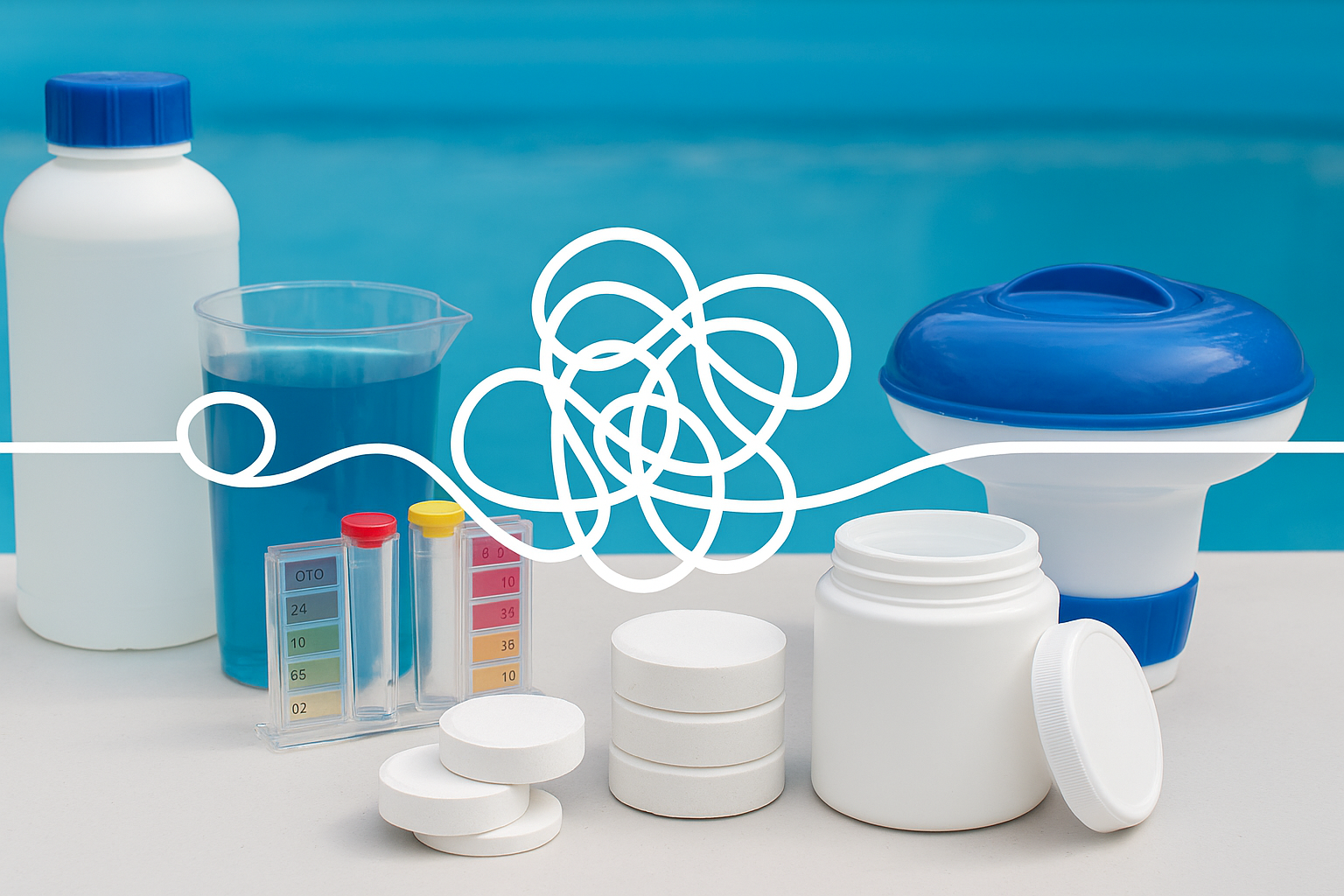
Introduction: The hidden science behind clean water
Maintaining a sparkling, safe pool looks simple from the deck: add a tablet, test the water, and enjoy. In reality, pool chemical management is an evolving science that balances chemistry, environmental factors, and human behavior. Understanding that complexity helps you prevent cloudy water, skin and eye irritation, algae outbreaks, and costly repairs.
- Pool chemistry is dynamic, not static.
- Small changes—temperature, swimmers, debris—can shift the balance quickly.
- Effective management combines testing, dosing, and preventive practices.
Why pool chemical management is complex
Pool water is a living system influenced by chemistry, biology, and physics. Multiple variables interact simultaneously, and treating one problem often affects another. This interconnectedness is the primary source of complexity.
- Interdependent chemical parameters: adjusting one level often alters others.
- Environmental variability: rain, sunlight, and temperature change demand.
- Human factors: bather load and contaminants introduce organic and inorganic material.
Key chemicals and their interactions
Knowing the main chemicals and how they interact is essential for consistent water quality. Below are the typical players and their impacts.
Chlorine and sanitizers
Chlorine is the most common sanitizer, but alternatives like bromine and salt systems are also used. Sanitizer levels must be maintained to control bacteria and algae.
- Free chlorine: active sanitizer that directly kills microbes.
- Combined chlorine (chloramines): forms when chlorine reacts with ammonia/organics and causes odor/irritation.
- Stabilizers (cyanuric acid): protect chlorine from UV but too much reduces effectiveness.
pH and alkalinity
pH affects comfort and sanitizer effectiveness. Total alkalinity acts as a buffer, helping to stabilize pH.
- Ideal pH: typically 7.2–7.6 for comfort and chlorine efficiency.
- Low alkalinity leads to pH swings; high alkalinity causes scale and cloudiness.
Calcium hardness and metal content
Calcium levels and dissolved metals influence scaling and staining risks.
- Low calcium can erode pool surfaces; high calcium causes scale buildup.
- Iron and copper may stain and are influenced by source water and corrosion.
Testing and monitoring: the backbone of good management
Frequent, accurate testing is the only reliable way to track the many moving parts of pool chemistry. Relying on guesswork leads to imbalances and increased maintenance costs.
- Test frequency: home pools should be tested at least 2–3 times weekly; commercial pools more often.
- Test types: reagent kits, electronic meters, and strips each have pros and cons—accuracy matters.
- Record keeping: track trends to anticipate problems before they become emergencies.
Seasonal and environmental factors
The environment dramatically influences chemical demand. Understanding seasonal patterns lets you adjust routines proactively.
- Summer: higher temperatures and sunlight increase sanitizer demand and stabilizer breakdown.
- Rain and runoff: dilute chemicals and can introduce metals, phosphates, or contaminants.
- Winterizing: different chemicals and procedures are needed to protect equipment and surfaces.
Safety and storage considerations
Pool chemicals are effective but hazardous if stored or handled incorrectly. Safe practices protect people, pets, and property.
- Store chemicals in a cool, dry, well-ventilated area away from direct sunlight.
- Keep incompatible chemicals separate (e.g., chlorine and acids) to prevent dangerous reactions.
- Use personal protective equipment—gloves, eye protection—and follow label instructions.
Best practices and practical tips
To manage complexity without constant stress, adopt routines and tools that simplify decision-making and reduce reactive fixes.
- Establish a weekly checklist: test, adjust pH, check sanitizer, inspect equipment.
- Use automation where feasible: feeders, controllers, and automation systems maintain steady levels.
- Address root causes: manage debris, encourage pre-shower use, and control bather load to reduce chemical demand.
- When unsure, consult a professional: water chemistry experts can diagnose persistent issues quickly.
Conclusion
Pool chemical management is complex because many variables interact and change over time. With regular testing, consistent routines, safe handling, and an awareness of environmental impacts, you can keep water clear, safe, and enjoyable. Small, proactive steps save time and money while improving swimmer comfort and safety.