
Introduction: Why Pool Leak Repair Matters
A leaking pool is more than an inconvenience — it wastes water, raises bills, and can damage pool structure and surrounding landscaping. For beginners, small leaks are often fixable with basic tools and careful steps. This guide walks you through detecting leaks, choosing repair methods, and knowing when to call a professional.
- Understand the risks: erosion, equipment damage, higher costs.
- Act quickly: early detection limits structural problems.
- Learn simple repairs before minor issues worsen.
How to Tell if Your Pool Is Leaking
Before attempting any repair, confirm that your pool is losing water beyond normal evaporation. Use simple tests to pinpoint a leak.
- Bucket test: Compare water loss inside and outside a bucket placed on a step.
- Check equipment: Look for damp areas around the pump, filter, heater, and plumbing.
- Visual inspection: Look for cracks, gaps, bubbling ph of plaster, or unusually wet ground nearby.
Bucket Test Steps
The bucket test is the easiest way to verify a leak.
- Fill a bucket with pool water and place on a step so its rim is above the waterline.
- Mark water levels inside the bucket and pool.
- After 24 hours compare the difference; more pool loss than bucket loss indicates a leak.
Tools and Materials You’ll Need
Gather the right tools to make the job easier and safer. Many basic repairs require only a few items.
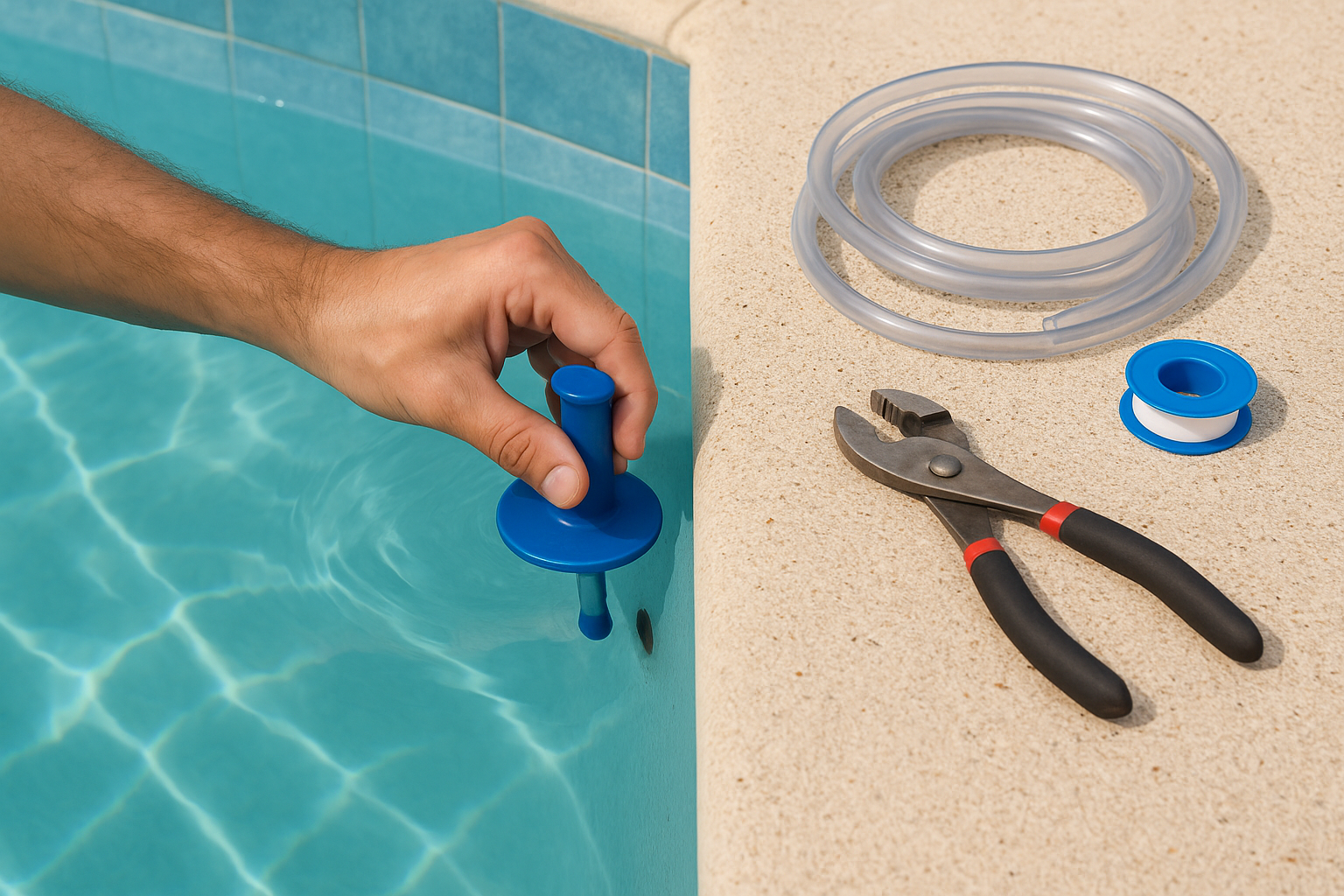
- Essential tools: gloves, screwdriver set, snorkel or mask (for small pools), putty knife, and sandpaper.
- Repair materials: pool patching compound, vinyl patch kits, waterproof epoxy, PVC cement, and plumber’s tape.
- Optional: dye for leak detection, wet/dry vacuum, and a handheld UV light for certain vinyl issues.
Common Leak Types and Beginner Repair Methods
Different pool constructions need different approaches. Below are common leak types and step-by-step fixes suited for beginners.
1. Leaks in Vinyl Liners
Vinyl pools often develop tears or punctures that are simple to repair with a patch kit.
- Clean and dry the damaged area thoroughly.
- Apply the adhesive and patch per kit instructions; press firmly and smooth out bubbles.
- Allow adequate curing time before refilling or re-pressurizing the pool area.
2. Cracks in Plaster or Concrete
Small surface cracks can often be filled; larger structural cracks may need professional help.
- Drain the pool to below the crack line if repair requires a dry surface.
- Clean the crack, then use hydraulic cement or a pool plaster repair compound to fill it.
- Finish and smooth the patch, then follow drying/cure times before refilling.
3. Leaking Fittings and Plumbing
Seals around returns, skimmers, lights, and plumbing joints are common leak points.
- Tighten visible fittings and replace worn gaskets or O-rings.
- Use PVC primer and cement on cracked or leaking glued pipe joints (isolate pump and system first).
- For underwater light or niche leaks, consider professional service unless you have experience with electrical pool components.
Testing After Repair
After any repair, verify success before declaring the job complete.
- Repeat the bucket test or monitor daily water levels for several days.
- Inspect surrounding soil or deck for dampness indicating hidden leaks.
- Check pool equipment for normal pressure and operation.
When to Call a Professional
Some leaks are beyond beginner repairs. Don’t hesitate to enlist a pro in these cases.
- Rapid or large volume water loss.
- Structural issues like major cracks or shifting decking.
- Leaks involving electrical components or main underground plumbing lines.
Preventive Tips to Avoid Future Leaks
Good maintenance reduces the chance of leaks and extends your pool’s life.
- Maintain proper chemical balance to prevent plaster deterioration and liner damage.
- Inspect skimmers, returns, and visible plumbing every season.
- Winterize properly in cold climates to avoid freeze damage.
Conclusion
Beginner-friendly pool leak repairs are often straightforward if you identify the problem and use the right materials. Start with simple diagnostics like the bucket test, gather proper tools, and take conservative steps to patch minor issues. For large leaks, electrical concerns, or structural damage, contact a licensed pool professional to avoid costly mistakes. With regular inspection and basic maintenance, you can keep your pool healthy and leak-free.