
Introduction
Discovering a leaking pool is stressful, but not every leak needs an immediate full-scale renovation. Temporary pool leak repair options can buy you time, limit water loss, and protect surrounding structures while you plan a permanent fix. This guide outlines practical, temporary solutions, required materials, step-by-step methods, and tips to make repairs last longer.
Common Temporary Repair Methods
There are several temporary pool leak repairs suitable for different leak locations and materials. Each method has pros and cons, and effectiveness depends on leak size, pool surface, and whether repairs can be made underwater.
Underwater Patch Tape
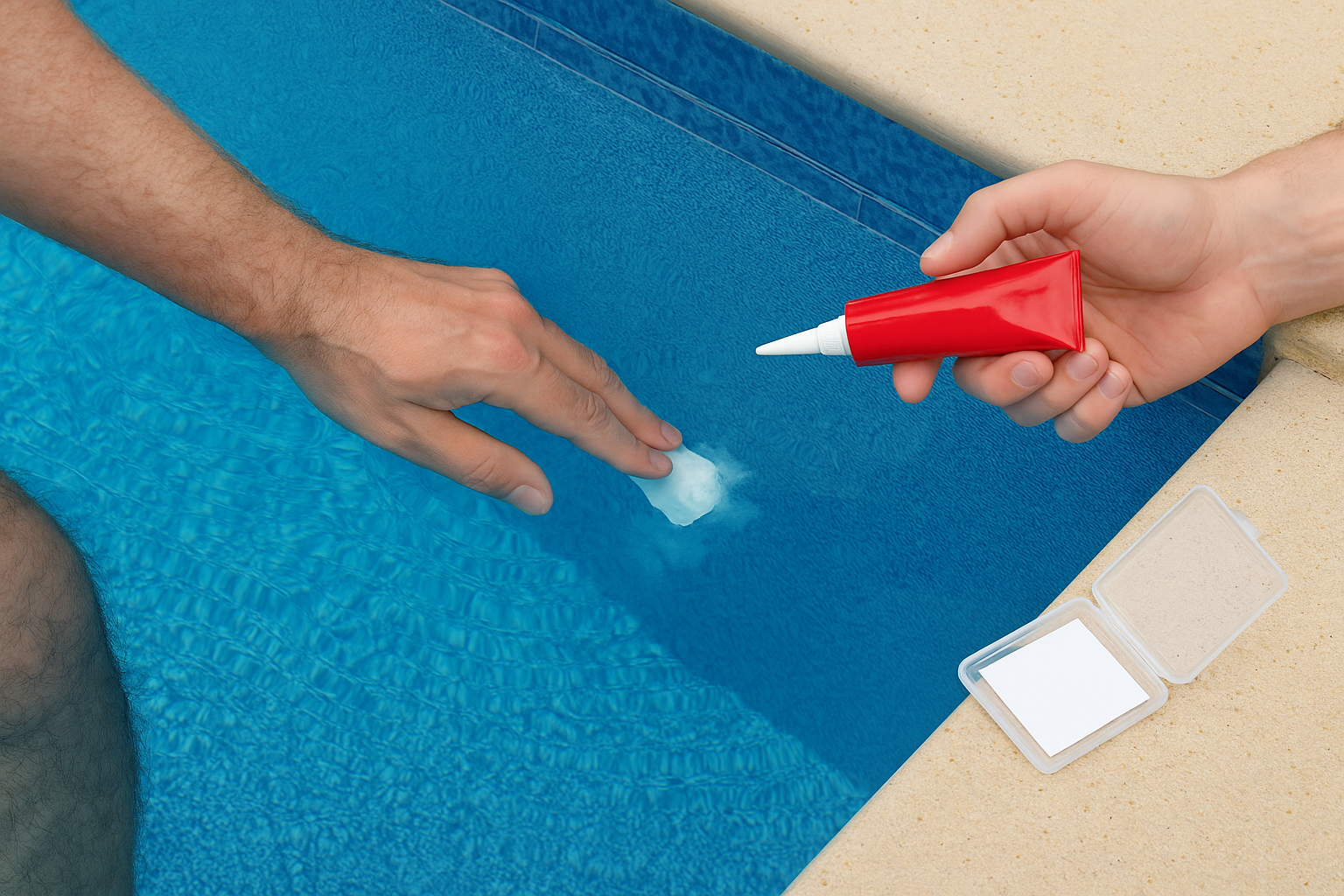
Underwater patch tape (also called pool repair tape or waterproof adhesive tape) is designed to stick to wet surfaces and provide an immediate seal.
- Pros: Quick, easy to apply underwater, no draining required.
- Cons: Best for small tears or cracks; may not hold long-term on rough or dirty surfaces.
- Best for: Vinyl liners, small cracks in fiberglass or concrete where surface can be cleaned.
Epoxy Putty / Underwater Putty
Epoxy putty is a moldable compound that cures underwater and bonds to many surfaces. It’s useful for sealing holes around fittings, drains, and cracks.
- Pros: Stronger than tape, works directly underwater, good for irregular shapes.
- Cons: Requires proper mixing and application; may be temporary on moving joints.
- Best for: Concrete, metal fittings, fiberglass spots, and small to medium-sized leaks.
Pool Sealants and Caulk
Pool-grade sealants are designed to adhere to wet substrates and can be used around returns, lights, and minor surface cracks.
- Pros: Readily available in tube form, flexible, and better for seams and edges.
- Cons: May require partial draining or at least a dry area; not ideal for large holes.
- Best for: Joints, pipe penetrations, and liner seams.
Inflatable or Rubber Patch Kits
For vinyl liners, repair kits often include adhesive patches or inflatable plugs that press a patch into place from under the liner.
- Pros: Designed specifically for liners, often easy to install.
- Cons: Patch area must be reasonably clean; liner replacements are a long-term solution.
- Best for: Small tears or punctures in vinyl liners.
Materials and Tools You’ll Need
- Underwater patch tape and pool-grade epoxy putty
- Pool sealant/caulk (silicone-free, pool-rated)
- Sandpaper or wire brush (for dry-area prep)
- Gloves, mixing tools, disposable rags
- Flashlight/headlamp for underwater inspections
- Bucket or small pump if partial draining is necessary
Step-by-Step Quick Fixes
Using Underwater Patch Tape
1. Locate the leak and clear debris around the area as best you can.
2. Cut a patch larger than the hole and round the corners to prevent peeling.
3. Press tape firmly onto the wet surface, smoothing from center outward to remove bubbles.
4. Add an overlapping second layer for extra security.
Applying Epoxy Putty
1. Dry the area if possible; if not, you can apply many products underwater.
2. Mix epoxy as directed (knead until uniform color).
3. Press into the hole or around fittings, shaping to cover edges.
4. Allow curing time per product instructions before re-pressurizing if you drained water.
Sealing Around Fittings
1. Turn off pumps and reduce pressure.
2. Apply pool-rated sealant around the fitting flange or light niche.
3. Smooth bead with a gloved finger and let cure according to instructions.
When Temporary Fixes Are Appropriate
Temporary repairs are useful when you need to:
- Stop urgent water loss before a permanent repair can be scheduled.
- Protect landscaping, foundations, or nearby structures from water damage.
- Get through a season while budgeting for a proper fix.
However, temporary solutions are not substitutes for a full repair when structural damage, large leaks, or ongoing seepage are present.
Tips to Prolong Temporary Repairs
- Clean the area thoroughly before applying a patch whenever possible.
- Keep water chemistry balanced—extreme pH or chlorine can degrade adhesives faster.
- Inspect temporary patches regularly and reapply or reinforce as needed.
- Mark patched areas and document the date and materials used for later permanent repair planning.
When to Call a Professional
Contact a pool repair specialist if:
- Water loss is rapid or you can’t locate the leak.
- Leaks occur near structural elements, pool lights, or equipment lines.
- Temporary fixes fail repeatedly or the pool requires draining for a reliable repair.
Professionals can perform pressure tests, dye tests, and structural assessments to determine the permanent solution.
Conclusion
Temporary pool leak repair options — from underwater tape to epoxy putty and pool sealants — can stabilize a problem quickly and prevent water damage while you arrange a lasting repair. Choose the method that suits the leak type and pool material, follow proper prep and cure instructions, and remember that a professional assessment is often the best route for significant or recurring leaks.