
Introduction
Pool plumbing leaks can be deceptively simple on the surface. A small drop in water level may seem like a minor nuisance, but behind that symptom could be a complex issue involving buried pipes, fittings, valves, or equipment connections. Repairing these leaks is often more complicated than patching a visible crack, because pool plumbing systems are built with multiple components working together under pressure.
For homeowners, the challenge is not just finding the leak, but understanding where it is, how severe it is, and what kind of repair will hold long term. Some leaks are easy to access and fix, while others require specialized tools, leak detection methods, or even digging. That is why pool plumbing leak repair is often considered one of the more technical pool maintenance jobs.
Why Pool Plumbing Leaks Are Hard to Diagnose
One of the biggest reasons pool plumbing repairs are complex is that the source of the leak is not always where the water appears. Pool systems circulate water through underground lines, equipment pads, returns, skimmers, drains, and cleaners. A leak in any of these areas can cause a similar drop in water level.
Unlike a visible crack in a sink or hose, pool leaks are often hidden inside walls, underground, or beneath decking. Water can travel along pipes or soil paths before surfacing, which makes the actual leak location difficult to identify.
- Leaks may occur underground and remain invisible for weeks.
- Water loss can be caused by more than one damaged component.
- Symptoms may mimic normal evaporation or splash-out.
- Equipment problems can be mistaken for plumbing leaks.
Common Causes of Pool Plumbing Leaks
To understand the complexity of repair, it helps to know what can fail in the first place. Pool plumbing systems include many parts that can wear out, shift, or crack over time. Some issues are caused by age, while others come from ground movement, pressure changes, or poor installation.
Here are some of the most common causes of pool plumbing leaks:
- Cracked pipes: Underground PVC pipes can break due to soil movement, freezing, or improper installation.
- Loose fittings: Threaded or glued connections may weaken over time and begin leaking.
- Damaged valves: Multiport valves, check valves, and diverter valves can wear out internally.
- Skimmer leaks: Skimmer throat cracks or plumbing connections behind the skimmer can be difficult to access.
- Return line issues: Water returning to the pool may escape through broken fittings or underground pipes.
- Equipment pad leaks: Pumps, filters, and heaters can leak from seals, unions, or pressure-side plumbing.
Each of these problems requires a different repair strategy, which is one reason pool plumbing leaks are rarely a one-size-fits-all fix.
The Challenge of Leak Detection
Before any repair can begin, the leak has to be located accurately. This step alone can be time-consuming and technically demanding. Pool professionals often use pressure testing, dye testing, listening devices, and isolation techniques to narrow down the source.
In many cases, a technician must determine whether the leak is in the plumbing lines, the structure of the pool, or the equipment. This often involves separating the system into sections and testing each one individually. If the leak is underground, professionals may also use specialized acoustic equipment or excavation tools.
- Pressure testing helps confirm which line is leaking.
- Dye testing can reveal leaks around visible fittings or skimmers.
- Isolation testing identifies which section of plumbing is affected.
- Electronic leak detection may be used for hard-to-find underground leaks.
This diagnostic process is often the most complex part of the job because it requires patience, experience, and a good understanding of how pool systems are designed.
Why Repairs Can Be Labor-Intensive
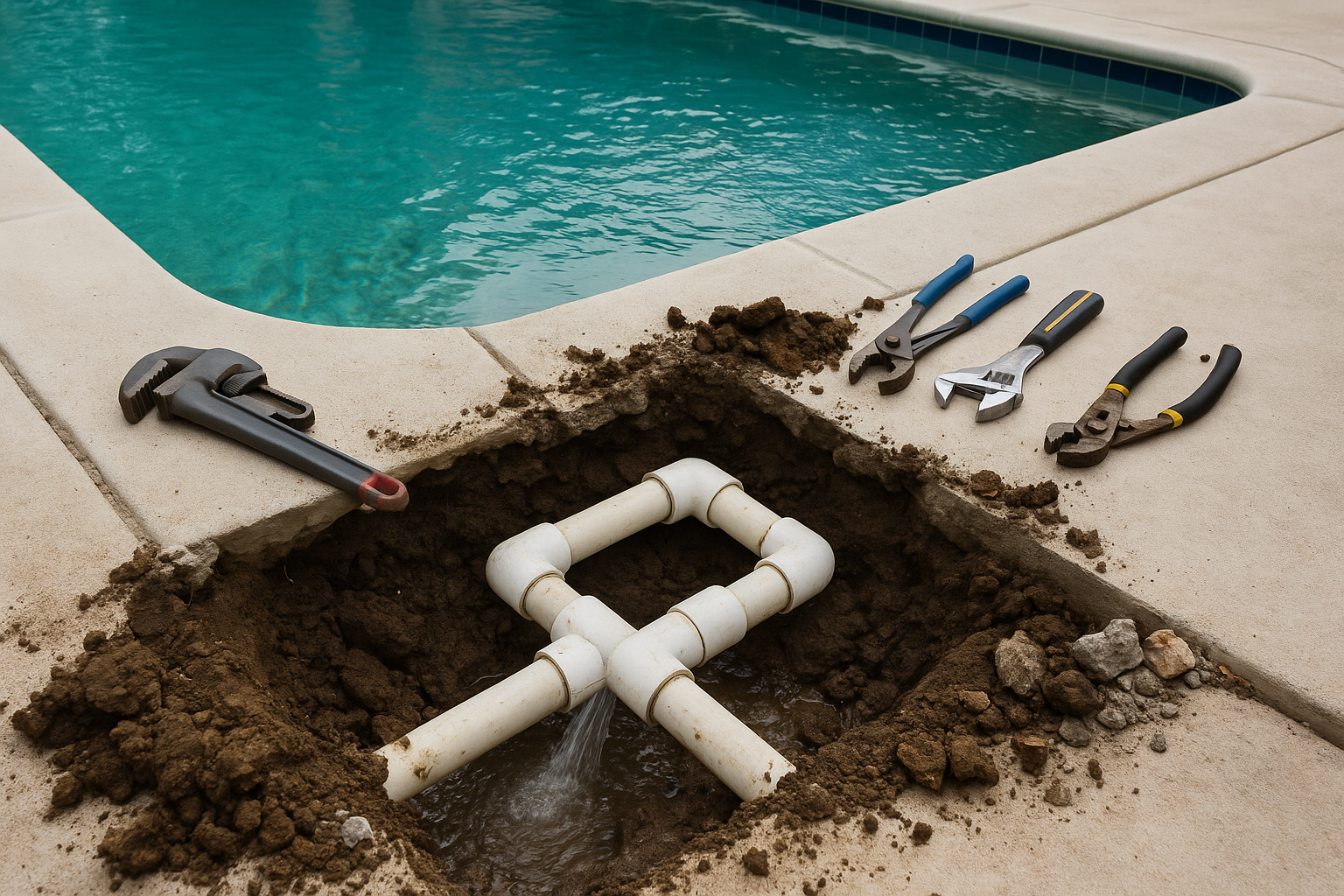
Once the leak is found, the repair itself can still be difficult. Some plumbing is easy to reach at the equipment pad, but much of it may be buried beneath concrete, pavers, landscaping, or decking. Accessing the damaged section often means partial demolition or excavation.
Even after the pipe is exposed, the repair must be done carefully. PVC plumbing needs clean cuts, proper fittings, compatible primer and glue, and enough curing time to ensure a watertight seal. If the repair is rushed or not aligned correctly, the leak may return.
- Underground pipes may require digging to reach the damaged section.
- Repairs near concrete or decking can be disruptive and costly.
- Poorly executed repairs can lead to repeated leaks.
- Some systems need pressure retesting after the repair is complete.
The more difficult the location, the more labor and planning the repair requires. That is why repair costs can vary widely depending on the leak’s location and severity.
How Pool Design Affects Repair Difficulty
Not all pools are built the same, and the design of the pool can greatly affect repair complexity. Older pools may have outdated plumbing layouts, nonstandard pipe materials, or limited access points. Newer pools may have more efficient systems but can still include dense, tightly packed equipment setups.
The layout matters because technicians need to know where each line runs and how the plumbing is connected. In some cases, plans are unavailable or inaccurate, which means the repair team must trace the system manually.
- Older pools may have brittle pipes or hidden repairs from previous work.
- Custom pool designs can make plumbing routes harder to trace.
- Multi-feature pools with spas, waterfalls, or automation systems have more potential leak points.
- Limited access around the equipment pad can increase repair time.
When DIY Repairs Make Sense—and When They Don’t
Some pool owners are comfortable handling small maintenance jobs, but plumbing leaks are not always ideal for DIY repair. A visible leak at a union or accessible fitting may be manageable for someone with the right tools and experience. However, underground leaks, pressure-side pipe breaks, and skimmer leaks often require professional help.
The biggest risk with DIY pool plumbing repair is that the true source of the leak may be missed. Replacing the wrong fitting or sealing the wrong area can waste time and money while the water loss continues.
- DIY may be suitable for accessible, minor leaks on the equipment pad.
- Professional repair is recommended for buried, structural, or pressure-related leaks.
- Repeated water loss is a sign the problem needs expert diagnosis.
- Complex plumbing systems are best handled with specialized testing equipment.
Preventing Future Pool Plumbing Leaks
While no pool system is leak-proof forever, regular maintenance can reduce the chances of major plumbing problems. Routine inspections help catch small issues before they become costly repairs. Keeping equipment balanced and protecting plumbing from environmental stress can also extend the life of the system.
Simple prevention steps include:
- Scheduling annual professional inspections.
- Watching for unexplained water loss or wet spots around the pool.
- Maintaining proper water chemistry to protect seals and equipment.
- Protecting pipes from freezing conditions where applicable.
- Addressing small drips and loose fittings promptly.
Preventive care may not eliminate leaks entirely, but it can reduce the complexity and cost of future repairs.
Conclusion
Repairing pool plumbing leaks is often a detailed process that involves diagnosis, testing, access challenges, and precise repair work. What starts as a small water loss can turn into a complex issue hidden underground or inside the equipment system. Understanding this complexity helps pool owners make better decisions, avoid unnecessary damage, and know when to call in a professional.
With the right approach, even difficult leaks can be identified and repaired effectively, helping keep your pool running safely and efficiently.