
Hidden Leaks in Pool Plumbing: Why They Matter
Hidden leaks in pool plumbing can quietly waste water, damage equipment, and drive up utility bills before you ever notice a problem. Because many plumbing lines are buried underground or tucked behind walls and decks, a small leak can go undetected for weeks or even months.
What makes these leaks especially frustrating is that the pool may still appear to be working normally. Water loss may seem minor at first, but over time it can create expensive repairs and even structural issues around the pool area.
- They often develop out of sight in underground pipes or fittings.
- They can lead to higher water and chemical costs.
- They may cause pump strain and reduce circulation efficiency.
- They can erode soil, damage decking, or undermine surrounding structures.
Common Signs of a Hidden Pool Leak
Since the leak itself is not always visible, it helps to know the warning signs. Catching the problem early can save time, money, and frustration.
- Unexplained water loss: If you are adding water more often than usual, something may be wrong.
- Air in the system: Bubbles returning through the jets can point to a suction-side leak.
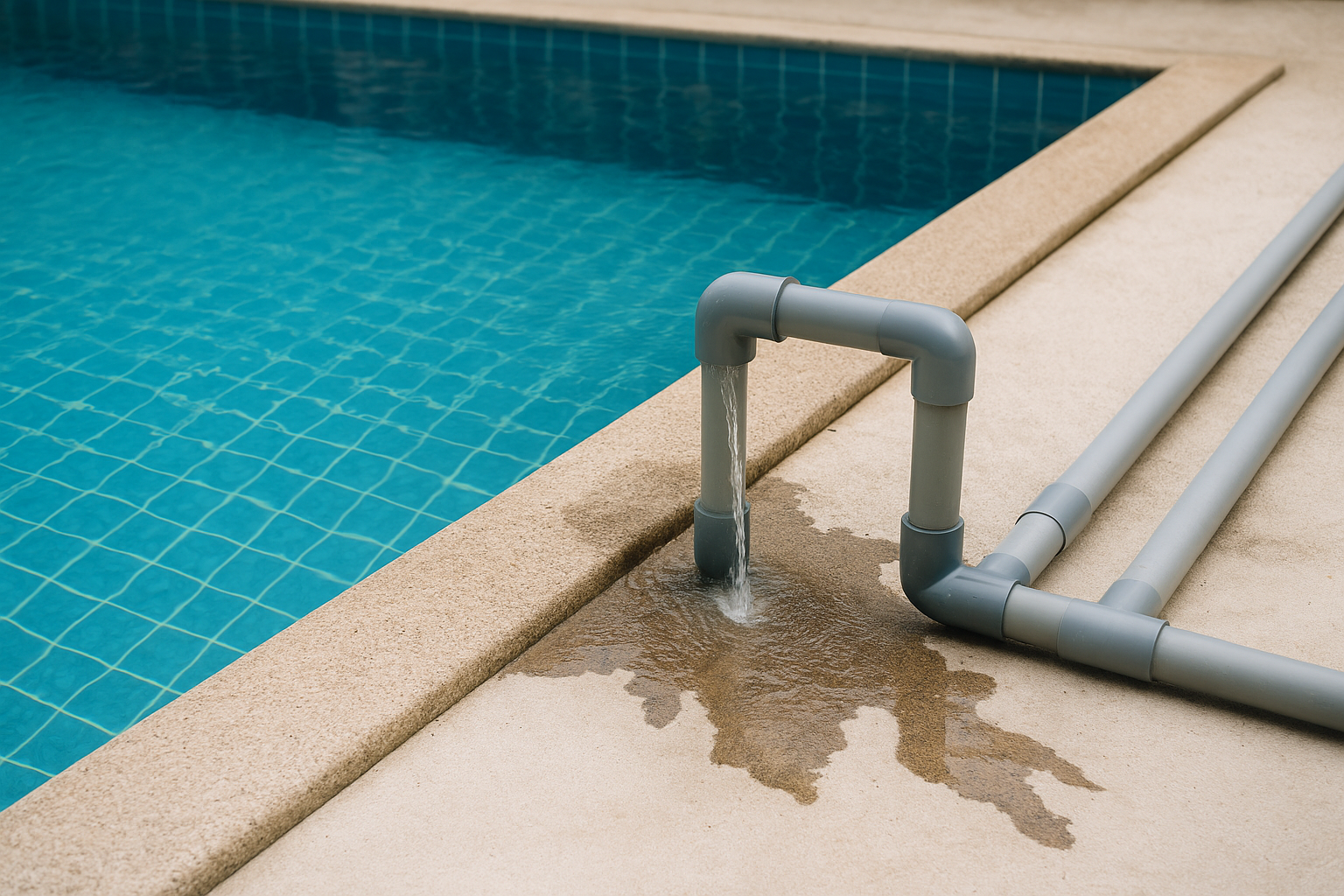
- Wet spots near the pool: Soggy ground or sinking soil around equipment may indicate underground plumbing issues.
- Pump losing prime: If the pump struggles to stay primed, a leak may be letting air into the lines.
- Unstable chemical levels: Repeatedly balancing water chemistry can become harder when water is constantly leaking out and being replaced.
If you notice one or more of these symptoms, it is worth investigating before the problem grows larger.
Where Hidden Pool Plumbing Leaks Usually Occur
Pool plumbing systems include multiple points where leaks can form. Some locations are more common than others, especially in older pools or systems with heavy wear.
Underground Pipes
Buried lines are among the hardest leaks to detect. These pipes can crack from ground movement, age, poor installation, or freezing temperatures.
Joints and Fittings
Connections between pipes, elbows, and couplings may loosen or degrade over time. Even a small gap can allow water to escape steadily.
Valves and Pump Equipment
Leaky valves, worn seals, and damaged pump components can create slow leaks that may look like normal condensation at first.
Skimmer and Return Lines
Plumbing that runs from the skimmer or returns to the pool often experiences pressure changes. These lines can crack or separate, especially near connection points.
What Causes Hidden Pool Plumbing Leaks?
There is usually more than one possible cause. Understanding what leads to leaks can help pool owners prevent future damage and make better repair decisions.
- Age and wear: Over time, pipes and seals naturally break down.
- Shifting soil: Ground movement can stress underground plumbing.
- Improper installation: Weak connections or poor materials may fail sooner.
- Freezing temperatures: Water left in lines can expand and crack pipes.
- Corrosion or chemical imbalance: Unbalanced water can shorten the life of plumbing components.
Even a well-maintained pool is not immune. Leaks can happen due to a single event or from gradual deterioration over time.
How Professionals Find Hidden Leaks
Because pool plumbing is often concealed, leak detection requires a careful and systematic approach. Professional testing can narrow down the source without unnecessary digging or guesswork.
- Pressure testing: Helps determine whether a specific line is leaking.
- Listening equipment: Sensitive tools can detect the sound of water escaping underground.
- Dye testing: Useful for checking visible areas like fittings or skimmers.
- Isolation methods: Individual lines are tested one at a time to identify the problem area.
- Visual inspection: Equipment pads, valves, and fittings are checked for clues such as moisture or corrosion.
These methods help reduce unnecessary damage to landscaping, decking, and pool structures while making repairs more accurate.
Why Hidden Leaks Should Be Fixed Quickly
A small leak may not seem urgent, but delaying repairs can create much bigger problems. Water loss is only part of the issue. A hidden leak can affect the entire pool system.
- Higher utility costs: Constant refilling increases water bills.
- More chemical use: Fresh water dilutes balanced chemistry.
- Pump damage: Air leaks and low water levels can strain equipment.
- Structural concerns: Long-term leaking may wash away soil or weaken nearby surfaces.
- Reduced enjoyment: A pool that constantly needs attention becomes more stressful to maintain.
Acting quickly usually means simpler repairs and less collateral damage.
How to Prevent Future Pool Plumbing Leaks
While no system is completely leak-proof, regular care can significantly lower the risk of hidden plumbing problems. Preventive maintenance helps spot small issues before they turn into major repairs.
- Inspect visible plumbing and equipment regularly for moisture or wear.
- Keep water chemistry balanced to protect pipes, seals, and fittings.
- Winterize the pool properly if you live in a cold climate.
- Watch for unusual water loss and track your pool’s water level.
- Schedule routine professional inspections, especially for older systems.
Consistent maintenance is one of the best ways to protect your pool investment and avoid surprise repairs.
Conclusion
Hidden leaks in pool plumbing can be easy to miss, but the signs often show up in water loss, equipment issues, or damp areas around the pool. By recognizing the symptoms early and getting the right testing done, you can protect your pool, save money, and avoid larger repairs down the road.