
Finding a pool leak can feel urgent, especially when water levels keep dropping and your chemical balance seems impossible to maintain. Unfortunately, many pool owners waste time, money, and frustration on methods that look helpful but often lead to false results. Understanding ineffective pool leak detection methods can save you from unnecessary repairs and help you focus on what actually works.
In this guide, we’ll cover common approaches that frequently miss the real problem, explain why they fail, and share practical tips for making leak detection easier and more accurate.
Why Some Pool Leak Detection Methods Fail
Not every sign of water loss means your pool has a true leak. Evaporation, splash-out, backwashing, and weather changes can all affect water levels. That’s why unreliable methods often create confusion rather than answers.
Many ineffective techniques fail because they:
- Do not isolate evaporation from actual water loss
- Only check the surface and ignore underground plumbing
- Rely too heavily on guesswork or visual assumptions
- Miss small leaks that only appear under pressure
When the cause is not identified correctly, repairs can target the wrong area. That can mean replacing equipment that is still working or digging up plumbing that is not damaged.
Common Ineffective Pool Leak Detection Methods
1. Guessing Based on Water Level Alone
One of the most common mistakes is assuming every drop in water level is proof of a leak. Pools naturally lose water through evaporation, especially in hot, windy, or dry climates. Swimmers also contribute to splash-out and carry-off.
Why it fails:
- It does not account for environmental conditions
- It cannot distinguish between normal loss and abnormal loss
- It may cause false alarms after hot weather or heavy use
Water level changes are useful clues, but they are not enough on their own. A marked bucket test or a professional inspection is far more reliable than simple observation.
2. Adding Dye Without Proper Isolation
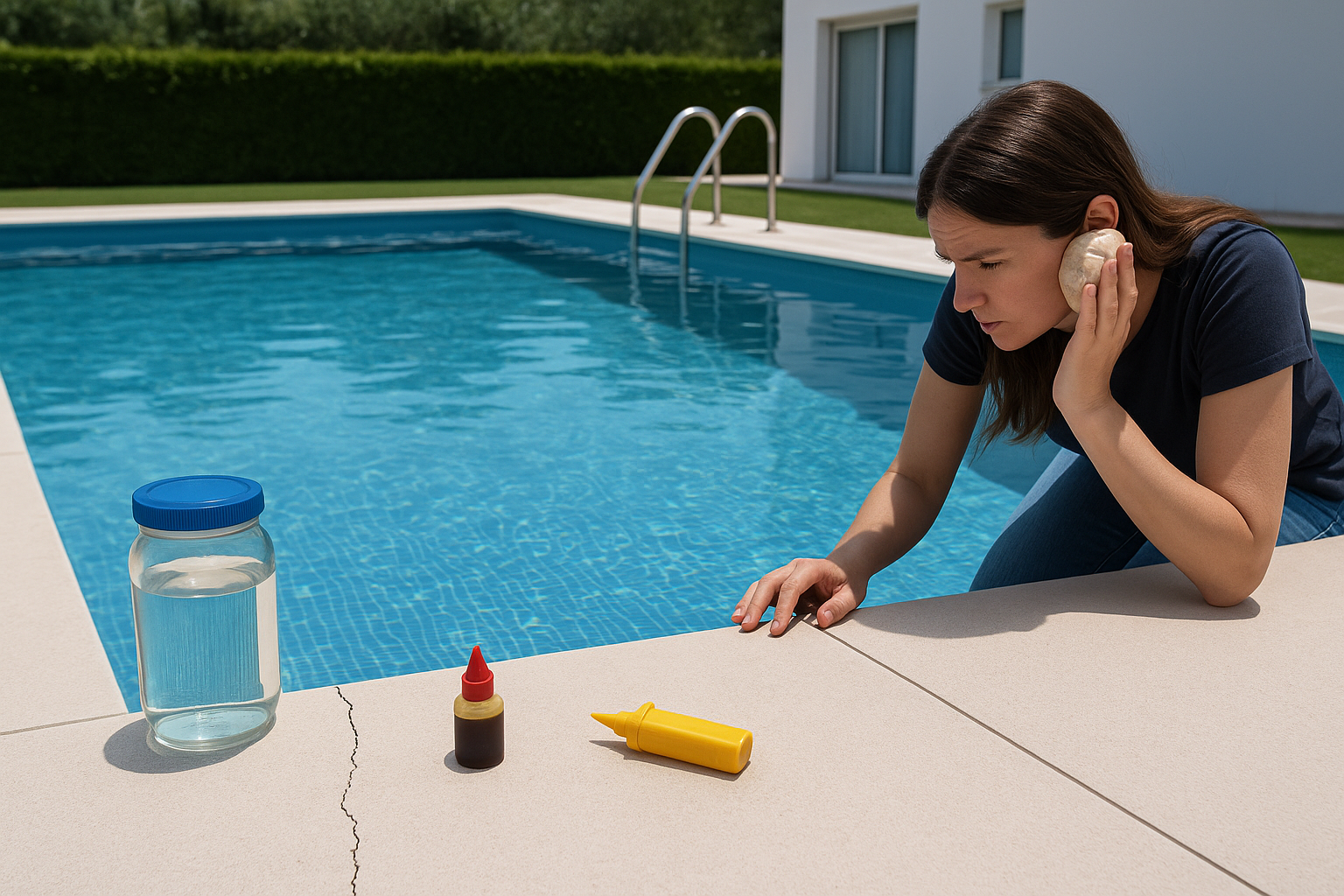
Dye testing is often recommended online, but it can be misleading if used carelessly. Spraying dye around the pool and watching where it moves does not always reveal the leak source, especially when water currents are strong.
Why it fails:
- Circulation from pumps and returns can move dye away from the leak
- Wind and swimmer movement can distort results
- Leaks in plumbing or fittings may not show near the surface
Dye testing only works well in controlled conditions, such as when the pump is off and the water is calm. Even then, it should be part of a broader diagnostic process, not the only method used.
3. Inspecting Only Visible Pool Equipment
Another weak approach is checking the pump, filter, heater, and visible plumbing while ignoring buried or hidden components. Many leaks happen in underground lines, return fittings, skimmers, main drains, or valves that cannot be fully assessed by eye.
Why it fails:
- Hidden plumbing issues are easy to miss
- Small cracks may not be visible until the system is under pressure
- Equipment may look dry even when water is escaping elsewhere
Visible inspection is a good first step, but it should never be the final step. A pool can lose water from a pipe underground while every surface component appears normal.
4. Relying on Food Coloring in the Water
Some pool owners use food coloring as a quick test near suspected leak areas. While this seems simple, it often produces confusing results. The color may drift because of water movement rather than because of suction from a leak.
Why it fails:
- It is sensitive to current and movement
- It can be hard to see clearly in larger pools
- It may confirm only that water is moving, not that a leak exists
If you use a dye test, use a professional leak-detection dye and turn off equipment for the clearest result. Even better, use it after narrowing down possible problem areas through a proper checklist.
5. Doing a One-Time Bucket Test Incorrectly
The bucket test can be helpful, but many people perform it incorrectly and draw the wrong conclusion. If the bucket is placed in an area with different sun exposure or if the water levels are not marked precisely, the test becomes unreliable.
Why it fails:
- Uneven sunlight or wind can skew evaporation rates
- Improper marking leads to inaccurate comparisons
- Short testing periods may not reveal slow leaks
A bucket test should be done carefully over a full day or more, with the same water conditions for both the bucket and the pool. If not, the results can be misleading.
6. Assuming the Leak Is in the Pool Shell
Cracks in the shell get blamed often, but many leaks actually come from plumbing, fittings, or equipment. Focusing only on the shell can waste time and money on repairs that do not solve the problem.
Why it fails:
- Leaks can occur far from the visible waterline
- Not all cracks leak enough to affect water loss significantly
- Plumbing leaks are often more common than structural leaks
A thorough inspection should include the shell, tile line, lights, skimmers, returns, and underground plumbing. Narrowing the issue too early can lead to expensive guesswork.
Signs You Need a Better Leak Detection Approach
If your pool water loss keeps happening despite repeated checks, it may be time to move beyond basic methods. You may need a more accurate diagnostic process if you notice:
- Water loss that continues regardless of weather
- Air in the pump or plumbing lines
- Soft spots or wet areas around the pool deck
- Unexplained chemical imbalance
- Repeated need to top off the pool
These signs often point to a leak that basic visual checks will not find. The sooner you identify the real cause, the less damage you may face later.
What to Do Instead
Instead of depending on ineffective methods, use a more systematic approach. A combination of observation, pressure testing, professional tools, and component-by-component inspection usually gives the best results.
Helpful next steps include:
- Start with a proper bucket test
- Inspect all visible fittings and equipment
- Check skimmers, returns, lights, and valves
- Look for wet soil, cracks, or settling around the pool
- Consider professional leak detection for hidden plumbing issues
Professional technicians often use specialized tools like pressure testing equipment, listening devices, and tracer dyes to pinpoint leaks more accurately than DIY methods alone.
Conclusion
Pool leaks can be frustrating, but the wrong detection method can make the problem even harder to solve. By avoiding unreliable shortcuts and focusing on accurate testing, you can save time, protect your equipment, and get your pool back in shape faster.
If your pool keeps losing water and the cause is still unclear, it may be time to move past guesswork and use a method that actually finds the source.