
Common Mistakes in Pool Leak Repairs
Pool leaks can waste water, raise utility bills, and damage the surrounding area if they are not handled correctly. While some leaks are simple to fix, many pool owners run into the same repair mistakes that lead to repeat problems, bigger expenses, and unnecessary frustration. Understanding these common missteps can save time and help you get a repair that actually lasts.
1. Misdiagnosing the Source of the Leak
One of the biggest mistakes in pool leak repairs is assuming the visible problem is the true source. A wet spot, a drop in water level, or a cracked tile does not always point directly to the leak location. Water can travel through soil, plumbing, or pool structure before showing signs on the surface.
- Assuming evaporation is a leak can lead to unnecessary repairs.
- Repairing the wrong area wastes both time and money.
- Small plumbing leaks may create damage far from the actual break.
Before repairing anything, it is important to confirm where the leak is coming from using proper testing methods such as a bucket test, pressure testing, or dye testing.
2. Ignoring Small Leaks
It is tempting to put off a small leak because the pool still seems usable. However, even a slow leak can become a bigger issue over time. Water loss can affect chemical balance, lower equipment efficiency, and weaken the pool structure or nearby soil.
- Minor leaks can turn into major plumbing failures.
- Constant water loss increases chemical and refill costs.
- Long-term leaks may damage decking, landscaping, or the pool shell.
Addressing leaks early is one of the smartest ways to avoid larger repairs later.
3. Using the Wrong Repair Materials
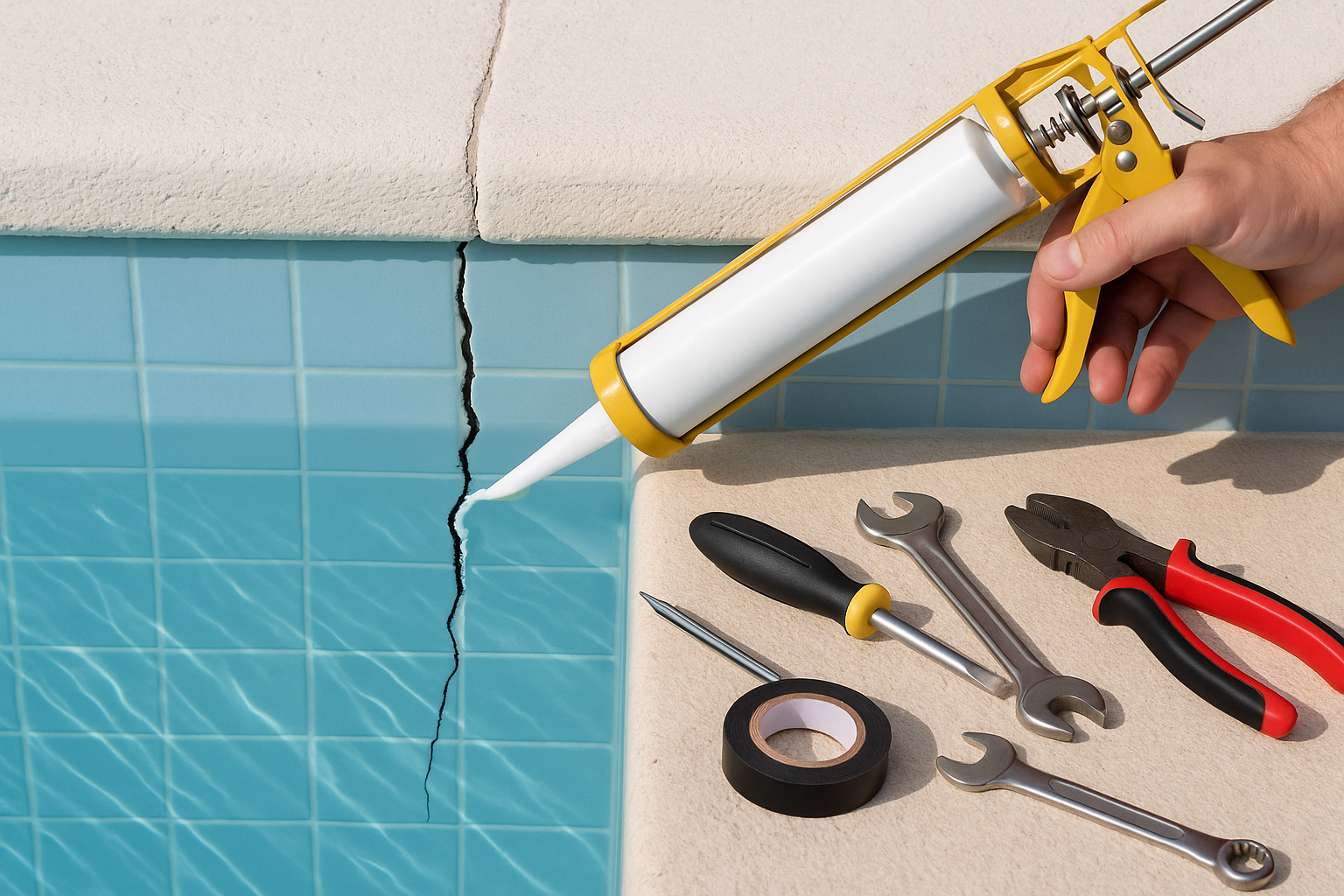
Not all pool leaks can be fixed with the same sealant or patch kit. A material that works on vinyl liners may not be appropriate for concrete, fiberglass, or PVC plumbing. Choosing the wrong product can cause the repair to fail quickly.
- Vinyl patch kits are different from concrete crack fillers.
- Some sealants are not designed for constant underwater use.
- Poor material matching often leads to repeat leaks.
Always use materials designed for the specific pool surface, pipe type, and leak location. When in doubt, check manufacturer recommendations or consult a pool repair professional.
4. Skipping Proper Surface Preparation
A repair is only as strong as the surface it bonds to. Dirt, algae, oil, calcium buildup, and loose debris can prevent patching materials from adhering correctly. Many pool owners rush straight to sealing the leak without cleaning and preparing the area first.
- Dirty surfaces reduce adhesion.
- Moisture or residue can weaken patch bonds.
- Poor preparation often causes repairs to peel or crack.
For a better result, the area should be cleaned thoroughly and, when needed, lightly sanded or dried according to the repair product instructions.
5. Failing to Test for Multiple Leaks
A pool can have more than one leak at the same time. Fixing only the most obvious one may improve the issue temporarily, but the water loss can continue if another leak remains hidden. This is especially common in older pools with aging plumbing and worn seals.
- Leaks may exist in both the pool shell and plumbing system.
- One repair can hide a second issue until later.
- Multiple leaks often require a full inspection, not a quick patch.
If the water level continues to drop after a repair, it is a sign that more testing is needed.
6. Repairing Without Turning Off the Equipment
Trying to patch a leak while the pump or circulation system is running can make the repair more difficult and less effective. Water movement can wash away sealant, disturb the patch, or make it harder to see the real problem.
- Moving water interferes with many underwater repairs.
- Equipment pressure can worsen certain plumbing leaks.
- Working with the system on may create safety risks.
For best results, shut down the pool equipment before beginning any repair and follow the correct safety steps for your system.
7. Overlooking Structural Problems
Not every pool leak is a simple patch job. Cracks caused by shifting soil, settling, or structural damage may keep reopening if the underlying issue is not addressed. Sealing the surface alone may only provide a short-term fix.
- Foundation movement can create recurring cracks.
- Structural leaks often require professional evaluation.
- Repeated repairs without solving the root cause can become expensive.
If a crack keeps returning, the problem may be more serious than a standard surface leak.
8. Not Rechecking the Repair
Once a patch or sealant is applied, some pool owners assume the job is done. In reality, every repair should be monitored to confirm that it holds. Water loss, air in the system, or visible moisture may indicate the repair needs adjustment.
- Always recheck water levels after the repair.
- Inspect the area for seepage or bubbling.
- Test equipment performance to make sure the issue is fully resolved.
Follow-up inspection helps catch problems before they become bigger failures.
How to Avoid These Pool Leak Repair Mistakes
The best way to avoid common repair mistakes is to slow down and take a methodical approach. Accurate leak detection, the right materials, and proper preparation make a huge difference in long-term results. For more complicated leaks, especially those involving plumbing or structural cracks, professional help can prevent costly trial and error.
- Confirm the leak source before repairing.
- Use products made for your pool type and leak location.
- Prepare the area thoroughly before applying any patch.
- Inspect again after the repair is complete.
Conclusion
Common mistakes in pool leak repairs often come down to rushing, guessing, or using the wrong materials. By identifying the leak correctly, addressing the root cause, and checking the repair afterward, you can avoid repeat problems and protect your pool investment. A careful repair today can save you from major headaches tomorrow.