
How to Tell If Your Pool Is Leaking
Pool water naturally disappears through evaporation, especially during hot, dry, or windy weather. But if you are adding water more often than usual, the water level keeps dropping, or the ground around the pool is wet, you may have a leak. Finding the source before attempting a repair can save time and prevent damage to your pool and yard.
- Look for water loss that continues in cool or calm weather.
- Check for soggy soil, settling pavers, or unusually green patches near the pool.
- Note whether the pool loses more water while the pump is running.
24-HOUR ON/OFF DIAGNOSTIC CYCLE TEST
Completing the 24-hour on/off test is the best approach to getting a good idea of whether your pool is leaking. Follow the steps below, and call us at (940) 484-4468 with your results. We can help you decide the best approach to locating the leak.
Step 1 – Fill & Mark
- Fill Up – Fill your pool and or spa to their normal levels. Use tape to mark the water levels.
- Disable Auto-Fill – Turn off the water supply valve if you have an auto-fill system.
- Turn Off Pumps – Turn off all circulation pumps and leave them off for 24 hours (unless freezing conditions are expected).
- Measure – After 24 hours, measure the distance between the original marks and the new water levels in both the pool and the spa.
Step 2 – Refill & 2nd Mark
- Refill – Bring the pool and spa back to their normal levels.
- Run the Pump – Keep the main circulation pump running for 24 hours. Do not use any water features or heat the pool.
- Measure Again – After 24 hours, measure the distance between the original marks and the new water levels.
Step 3 – Check for Leaks
- Evaporation – If your pool lost ¼ inch or less per day, it’s likely just evaporation.
- Possible Leak – If your pool lost over ½ inch per day, it is likely because of a leak.
- Gray Area – Losses between ¼ inch and ½ inch warrant further investigation.
Step 4 – Call Us
Contact Colin Irons Pool Leak Detection and Repairs Service at (940) 367-5621 to schedule a leak consultation with one of our experienced pool leak technicians. We will help you determine the best approach to locate and fix the leak.
Remember to have your pool filled to the correct level, clean, and clear for our technician to perform a detailed leak assessment.
Find the Leak’s Location
Once you have confirmed water loss, inspect the pool methodically. Start with simple visual checks before buying a repair product or calling a contractor. Check the waterline, fittings, and equipment area, then look over the pool shell and surrounding ground. A leak can occur in the pool itself, in the circulation system, or in an accessory such as a light or skimmer.
Inspect the Pool Shell and Fittings
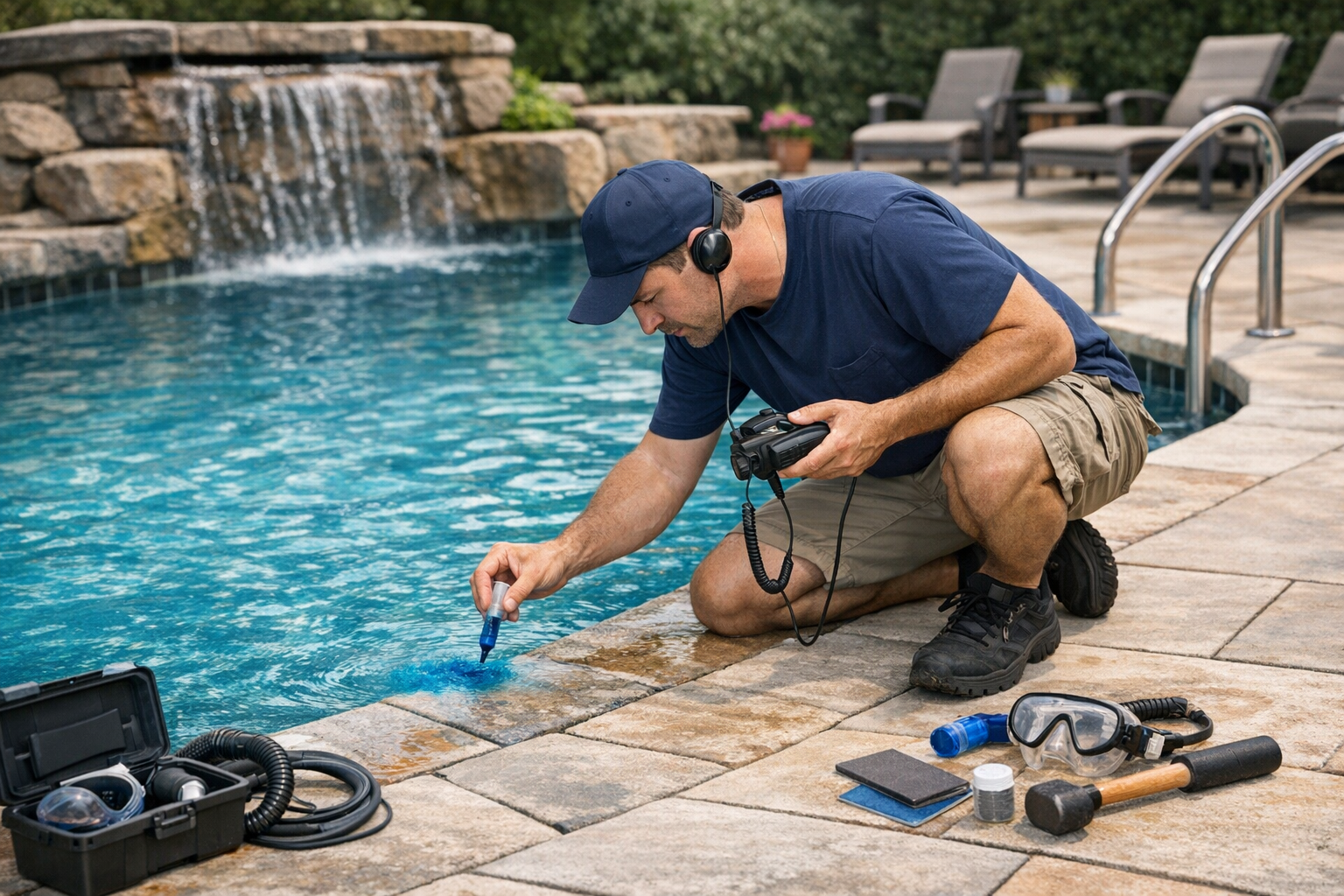
Examine the waterline closely, especially around skimmers, return jets, steps, lights, drains, and seams. Look for cracks, loose fittings, missing grout, bubbles in a vinyl liner, or areas where the liner has pulled away. With the pump off, you can also use a leak-detection dye designed for pools. Apply a small amount near a suspected crack or fitting; if the dye is drawn toward one spot, that may indicate a leak. Avoid disturbing the water while you check.
- Inspect underwater features safely from the pool deck or shallow area.
- Do not enter the pool if the water level is below the skimmer or another required operating level.
- Never touch electrical equipment or pool lights while standing in water.
Check the Pump and Plumbing
Look around the pump, filter, heater, and visible pipes for drips, damp connections, or puddles. A leak that appears mainly while the pump is running may be in the pressure-side plumbing. If water loss continues with the pump off, the problem may be in the pool shell, a fitting, or suction-side plumbing. Underground pipe leaks are harder to locate and may require pressure testing or specialized equipment.
- Switch off the pump before inspecting equipment or tightening a connection.
- Do not open a pressurized filter or plumbing component until you have safely released the pressure according to the manufacturer’s instructions.
- Call a pool professional if you suspect a buried pipe leak.
How to Fix a Leaking Pool
The right repair depends on the pool material and the location of the leak. Follow the product instructions carefully, and use materials made for swimming pools. A temporary patch can slow water loss, but a damaged liner, structural crack, or failed underground pipe may need professional repair.
Repair a Small Leak in a Vinyl Liner
Small liner punctures can often be patched with a pool-rated vinyl repair kit. Many kits include patches that can be applied underwater, so you may not need to drain the pool. Clean the area as directed, cut a rounded patch larger than the damaged spot, and press it firmly over the puncture. Avoid stretching the liner or using household adhesives, which may not bond underwater or may damage the material.
- Use a patch kit specifically labeled for your liner and application conditions.
- Give the patch the recommended time to set before brushing or using the pool.
- Have a professional assess large tears, loose seams, or an aging liner.
Seal a Small Crack in a Concrete or Fiberglass Pool
Small, accessible leaks around fittings or minor surface cracks may be repairable with a pool-rated sealant or repair compound. Clean and prepare the area exactly as directed by the product manufacturer. Structural cracks, cracks that are widening, or repeated leaks should be evaluated by a pool repair specialist. Draining a pool to expose a crack can be risky: groundwater pressure or soil conditions can damage or even lift an empty pool. Do not drain it without professional guidance.
Fix a Leaking Skimmer or Plumbing Connection
A minor leak at an accessible union or connection may be caused by a loose fitting or worn gasket. Turn off the pump, release system pressure safely, and check the connection for damage. Replace a deteriorated gasket with the correct part, or use a pool-rated sealant only where the manufacturer permits it. Cracked skimmers, leaking light conduits, and underground plumbing usually require specialized repairs.
- Do not overtighten plastic fittings; they can crack.
- Use replacement parts compatible with your pool system.
- Ask a qualified technician to pressure-test plumbing you cannot access.
When to Call a Pool Professional
DIY repairs are best for small, clearly located leaks. Get professional help if you cannot find the source, the pool is losing water rapidly, the leak is near electrical equipment, or you see structural movement, widespread cracking, or a suspected underground pipe problem. A technician can use pressure testing, listening equipment, or other leak-detection methods to pinpoint the issue without unnecessary digging.
- Keep the water at a safe operating level while arranging service.
- Do not let the pump run dry; low water can damage pool equipment.
- Follow local requirements for pool repairs and electrical safety.
Conclusion
To fix a leaking pool, first confirm water loss, then narrow down whether the problem is in the shell, fittings, or plumbing. Small liner punctures and minor accessible leaks may be suitable for a pool-rated repair kit, while structural or underground problems need professional attention. A careful diagnosis helps protect your pool and avoids repairs that make the damage worse.