
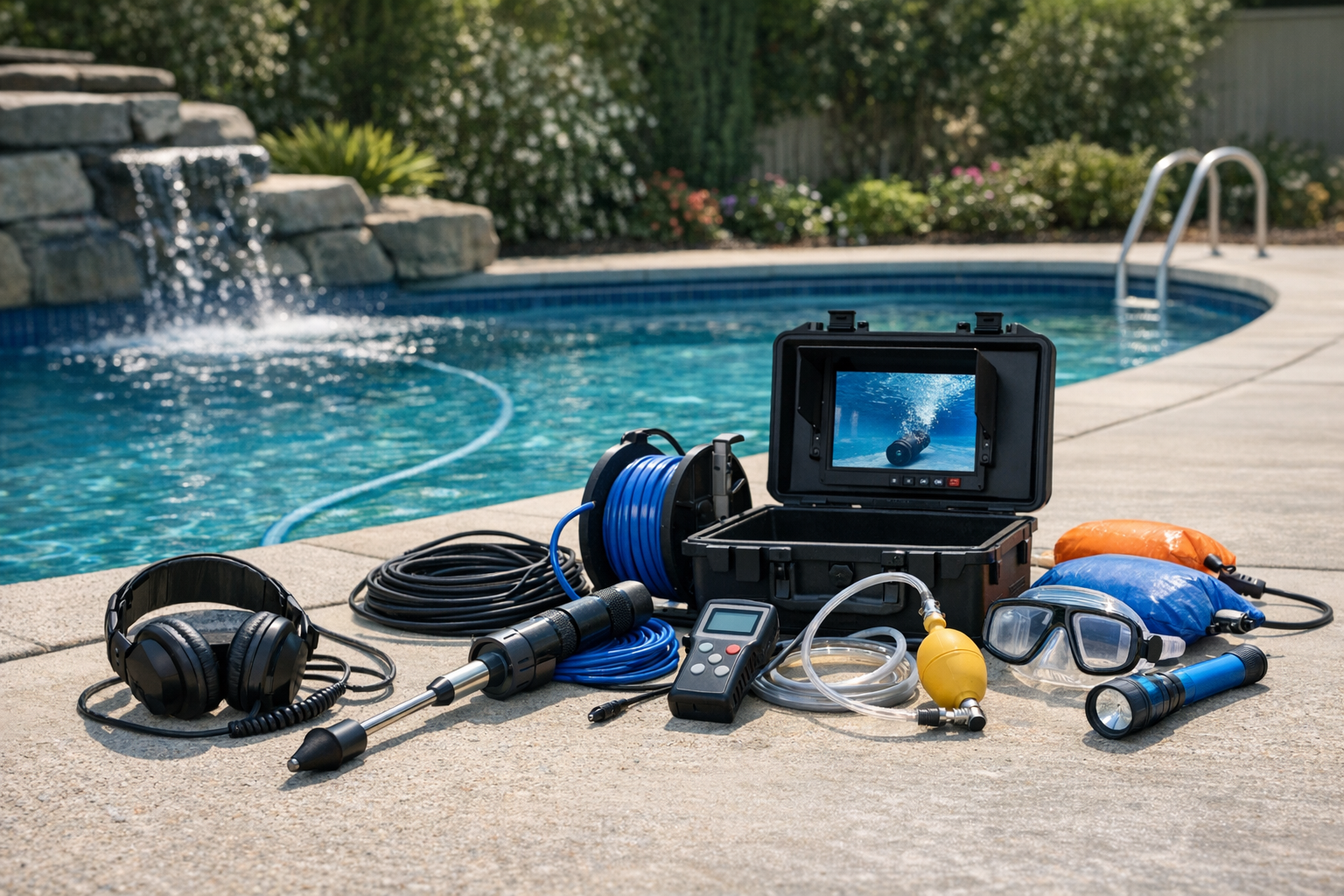
A pool leak can waste water, increase utility bills, and potentially damage the surrounding area. The challenge is finding the source: water may escape through the shell, plumbing, fittings, or equipment, and the wet spot may be far from the leak itself. The right pool leak detection equipment can help narrow down the cause, whether you are checking a simple fitting or investigating a suspected underground pipe leak.
Here is a practical guide to common detection tools, what each one can reveal, and how to choose the right approach.
Start by Confirming That Your Pool Is Leaking
Pool water naturally evaporates, especially in hot, dry, or windy weather. Before investing in specialized equipment, compare the pool’s water loss with normal evaporation. A simple bucket test can help distinguish evaporation from a likely leak.
- Set a bucket on a pool step and fill it with pool water so the inside and outside water levels are similar.
- Mark the water level inside the bucket and the pool level outside it.
- After about 24 hours, compare how much each level has dropped. Keep the pump setting consistent during the test.
If the pool loses noticeably more water than the bucket, a leak may be present. Repeat the test with the circulation system off, if practical. A difference between the two tests can offer a clue about whether the issue involves the plumbing or the pool structure.
Common Pool Leak Detection Equipment
Leak Detection Dye
Dye testing is a low-cost way to check visible cracks, seams, drains, skimmers, and return fittings. The equipment is simple: a dye testing syringe or squeeze bottle and a dye formulated for underwater use. With the water still, release a small amount near a suspected spot. If the dye is drawn toward the opening, water may be moving through a leak.
- Use a fine stream of dye and work slowly around one area at a time.
- Turn off the pump temporarily so water movement does not scatter the dye.
- Check around fittings and cracks without touching or disturbing the suspected opening.
Dye is best for pinpointing a leak you can see and reach. It is not designed to locate a hidden pipe break or confirm that an entire pool shell is watertight.
Pressure Testing Equipment
Pressure testing helps identify leaks in the pool’s plumbing lines. A technician isolates a pipe section, seals it with test plugs, and connects a pressure gauge and testing rig. If pressure drops under controlled conditions, the line may be leaking. Testing individual circuits—such as the skimmer, main drain, or returns—can help narrow down which section needs attention.
- Pressure gauges show whether a sealed line maintains pressure.
- Test plugs help isolate plumbing sections for separate checks.
- Professional rigs can test different line types and configurations.
Because incorrect pressure or a poorly fitted plug can damage equipment or create a safety hazard, pressure testing is often best left to a pool leak detection professional.
Electronic Listening Devices
Acoustic leak detectors use sensitive microphones or ground sensors to pick up the sound of water escaping from a pressurized pipe. A trained operator may listen at several points along the pool deck or ground to identify where the sound is strongest. These tools are particularly useful when a plumbing leak is underground and there is no visible sign of its location.
- Listening equipment can help locate leaks without digging along the entire pipe route.
- Results may be affected by traffic, pumps, wind, and other background noise.
- The tool is most effective when paired with plumbing isolation or pressure testing.
Underwater Cameras and Inspection Tools
Waterproof inspection cameras can help examine hard-to-see areas such as drains, fittings, and accessible sections of plumbing. A pole-mounted pool camera is useful for checking the pool surface and fittings, while specialized cameras may be used to inspect certain pipes. These tools can reveal cracks, loose components, or obstructions, but a visual inspection does not always prove that a leak is present.
For clearer results, technicians may combine camera inspection with dye testing or pressure measurements. The combination helps distinguish a visible defect from a feature that is not actually losing water.
Moisture Meters and Thermal Cameras
Moisture meters measure dampness in building materials, while thermal cameras display surface temperature patterns. Both can help investigate moisture around a pool, equipment pad, or nearby structure. They are supporting tools rather than standalone leak locators: wet soil, irrigation, shade, and weather can also affect readings.
- Moisture readings can help map damp areas near a suspected leak.
- Thermal imaging may highlight temperature differences that deserve further investigation.
- Confirm any finding with a targeted test before opening walls, decks, or landscaping.
How to Choose the Right Equipment
The best tool depends on where the water may be going. Start with visible checks and a bucket test, then use a targeted method based on the clues you find. Homeowners can often perform basic observations safely, while specialized testing may require training and equipment.
- Visible crack or fitting: Try an underwater dye test.
- Possible underground plumbing leak: Ask about pressure testing and acoustic detection.
- Unexplained dampness nearby: Consider moisture mapping as part of a broader inspection.
- Unclear or persistent water loss: Use a professional who can combine several detection methods.
When comparing service providers, ask which equipment they use, whether they test plumbing lines separately, and whether the inspection fee includes a written report or repair estimate. A clear explanation of the findings makes it easier to decide on next steps.
When to Call a Pool Leak Detection Professional
Call a professional if water loss continues after basic checks, if the suspected leak is under a deck or underground, or if you are not comfortable working with pressure-testing equipment. A specialist can also help when dye testing produces no clear result or when the pool appears to leak only while the pump is running.
- Record water levels and note when the pump is on or off.
- Photograph visible cracks, wet areas, or damaged fittings.
- Avoid digging or applying sealant before the leak location is confirmed.
Conclusion
Pool leak detection equipment ranges from a simple dye syringe to pressure gauges, acoustic sensors, cameras, and moisture meters. Start by confirming unusual water loss, then choose a tool suited to the likely source. For hidden plumbing leaks or uncertain results, professional testing can locate the problem more accurately and help avoid unnecessary repairs.