
A leaking pool liner can waste water, increase chemical costs, and potentially damage the ground around your pool. The good news is that many small vinyl liner leaks can be repaired without draining the pool. The right solution depends on where the leak is, how large it is, and the condition of the liner.
Use this guide to confirm a leak, choose a repair method, and know when it is time to call a pool professional.
How to Tell If Your Pool Liner Is Leaking
Pool water naturally evaporates, especially in hot, dry, or windy weather. Before buying a repair kit, check whether the water loss is greater than normal. A simple bucket test can help: place a bucket on a pool step, fill it with pool water to match the level inside, and mark both waterlines. Compare the levels after 24 hours, keeping the pump schedule consistent. If the pool level drops more than the bucket level, a leak may be present.
- Look for damp soil, soft spots, or erosion near the pool.
- Check whether the water level repeatedly stops at the same point, which can indicate a leak at that height.
- Inspect the liner for tears, pinholes, wrinkles, or areas pulling away from the track.
- Notice whether you need to add water more often than usual.
Find the Leak Before Choosing a Repair
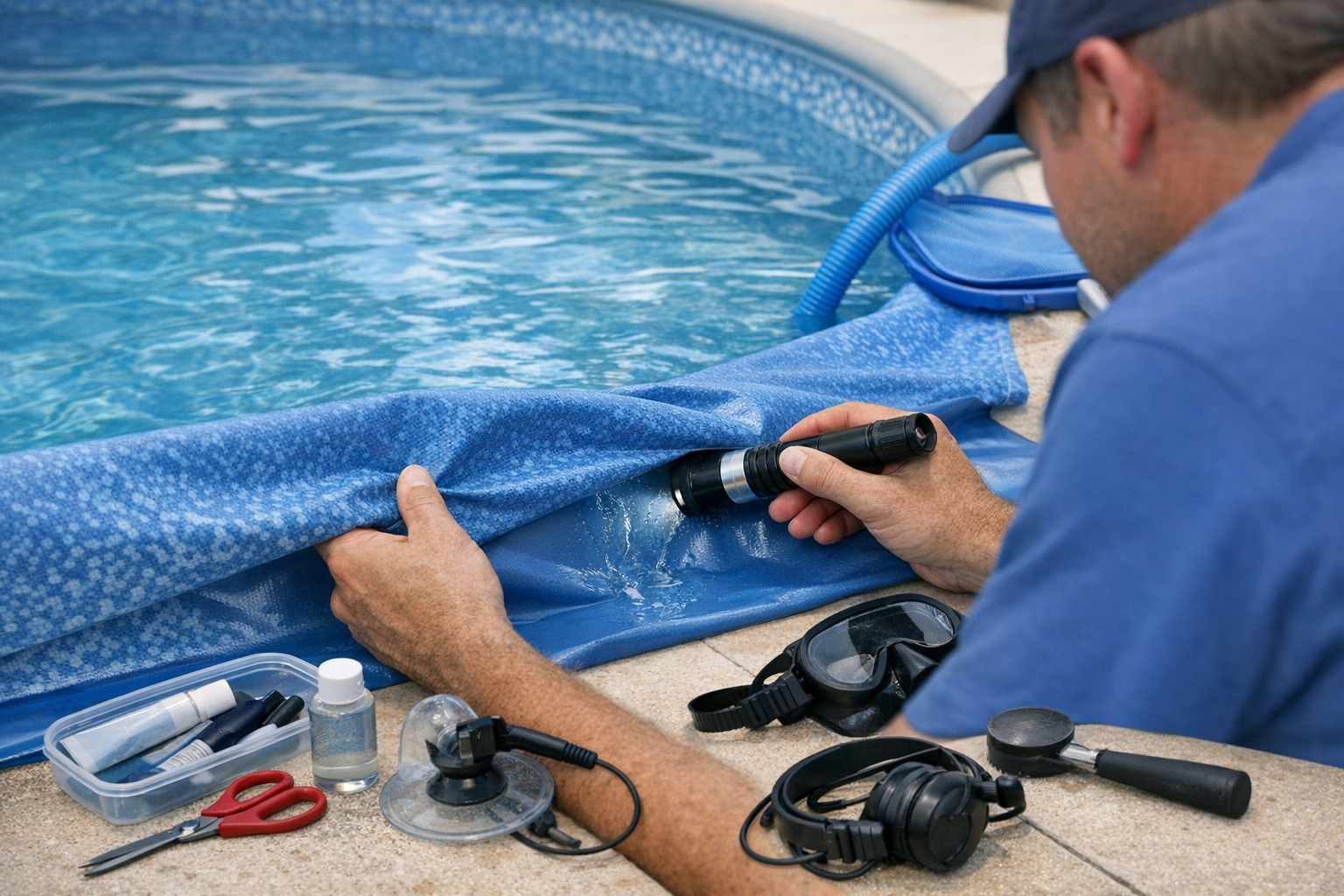
Search methodically rather than patching the first suspicious mark. Check around steps, corners, fittings, lights, and the waterline, where the liner may experience extra stress. Small holes can be hard to see, so move slowly and look for a change in the liner’s surface or a steady stream of tiny bubbles.
A pool leak-detection dye can help pinpoint a suspected hole. With the pump off and the water still, release a small amount of dye near the damage. If the dye is pulled toward one spot, that may be the leak. Follow the product directions and avoid disturbing the water while testing.
- Inspect underwater areas as well as the exposed liner above the waterline.
- Check fittings and seams carefully; leaks do not always come from a puncture.
- If no liner damage is visible, consider having the plumbing and pool equipment tested.
Pool Liner Leak Repair Solutions
Use an Underwater Vinyl Patch
For a small hole or tear below the waterline, an underwater vinyl patch kit is often the simplest fix. These kits use adhesive designed to cure in water. Cut a rounded patch larger than the damaged area, apply the adhesive as directed, and press the patch firmly over the leak. Smooth out air pockets and hold it in place for the recommended time.
- Round the patch corners so they are less likely to lift.
- Use a patch made for vinyl pool liners, not general-purpose household tape.
- Allow the adhesive to cure for the time stated on the package before judging the repair.
Apply a Dry Patch Above the Waterline
If the damaged area is above the water, a dry patch may provide a strong, neat repair. Lower the water only as far as needed to expose the hole, then clean and dry the vinyl completely. Apply the vinyl adhesive and patch according to the kit instructions, pressing from the center outward. Avoid draining the pool unnecessarily: an empty or partly drained vinyl pool can shift, wrinkle, or suffer damage, particularly in certain soil conditions.
Repair a Seam or Larger Tear
Seam leaks and longer tears can be more challenging because the liner is under tension. A flexible vinyl patch may work for a small seam separation if the surrounding material is still sound. A large split, repeated patch failure, brittle vinyl, or damage near a fitting may require specialized repair or replacement. Do not stretch a patch over a wide gap; it may peel as the pool moves and water pressure acts on the liner.
- Choose a patch large enough to extend beyond the entire damaged area.
- Follow the kit’s preparation and curing instructions closely.
- Contact a pool technician if the tear keeps spreading or the liner will not stay in its track.
Common Pool Liner Repair Mistakes to Avoid
Even a good patch can fail if the surface is dirty, the adhesive is unsuitable, or the repair is rushed. Before starting, read the kit instructions and confirm that it is compatible with your liner and whether it can be applied underwater.
- Do not use duct tape or unapproved adhesives as a permanent solution.
- Do not patch over algae, dirt, or a wrinkled area without preparing the surface.
- Avoid cutting the patch too small or leaving sharp corners.
- Do not drain a vinyl pool without professional guidance, especially if groundwater may be high.
- Do not ignore continued water loss after a repair; another leak may be present.
When to Call a Pool Professional
Professional help is worthwhile when the leak is difficult to locate, involves plumbing or a built-in fitting, or affects a large section of liner. A technician can use specialized leak-detection equipment and assess whether the vinyl is too worn for a lasting patch. Getting the cause right can prevent repeated repairs and limit damage around the pool.
- Call if the water loss is rapid or the ground near the pool is sinking.
- Get an expert assessment for multiple leaks, extensive seam damage, or a deteriorating liner.
- Ask whether the recommended repair includes a follow-up leak check.
Conclusion
Effective pool liner leak repair starts with confirming the water loss and locating the damage. Small holes often respond well to an appropriate vinyl patch, while seam, fitting, and widespread liner problems may need professional attention. Choose the repair to match the damage, follow product directions, and monitor the pool afterward to make sure the leak is resolved.