
Why Pool Leaks Shouldn’t Be Ignored
A little water loss is normal in a swimming pool. Heat, wind, low humidity, and frequent splashing can all increase evaporation. But if you’re topping up the pool more often than usual, there may be a leak. Finding the cause early can help prevent water waste, higher bills, equipment damage, and problems around the pool structure.
Look for a combination of clues rather than relying on one symptom alone. Changes in water level, damp areas, and unusual equipment behavior can help you decide whether to investigate further.
- Compare water loss over several days, not just from one afternoon to the next.
- Check the pool, equipment, and nearby yard for related signs.
- Arrange a professional inspection if the loss is rapid or you can’t locate the source.
Common Signs of a Pool Leak
Leaks can occur in the pool shell, plumbing, fittings, or equipment. Some are easy to notice; others show up as gradual changes in and around the pool.
1. The Water Level Keeps Dropping
Regularly adding water is one of the most recognizable signs of a pool leak. A pool that loses noticeably more water than usual—especially in calm weather—deserves a closer look. Evaporation varies by climate and conditions, so there is no single daily amount that applies to every pool.
- Mark the water level and check it at the same time each day.
- Note recent rain, wind, heat, and heavy pool use.
- Look for a consistent decline that continues beyond ordinary evaporation.
2. Wet or Soggy Areas Near the Pool
Unexpectedly damp soil, muddy patches, or unusually lush grass beside the pool may indicate that water is escaping underground. This is especially worth investigating if the area stays wet during dry weather or the dampness follows a pipe route.
- Check around the pool perimeter and equipment pad.
- Watch for soil that feels soft or appears to be sinking.
- Remember that irrigation, drainage, and rainfall can also cause wet spots.
3. Cracks, Gaps, or Loose Pool Finishes
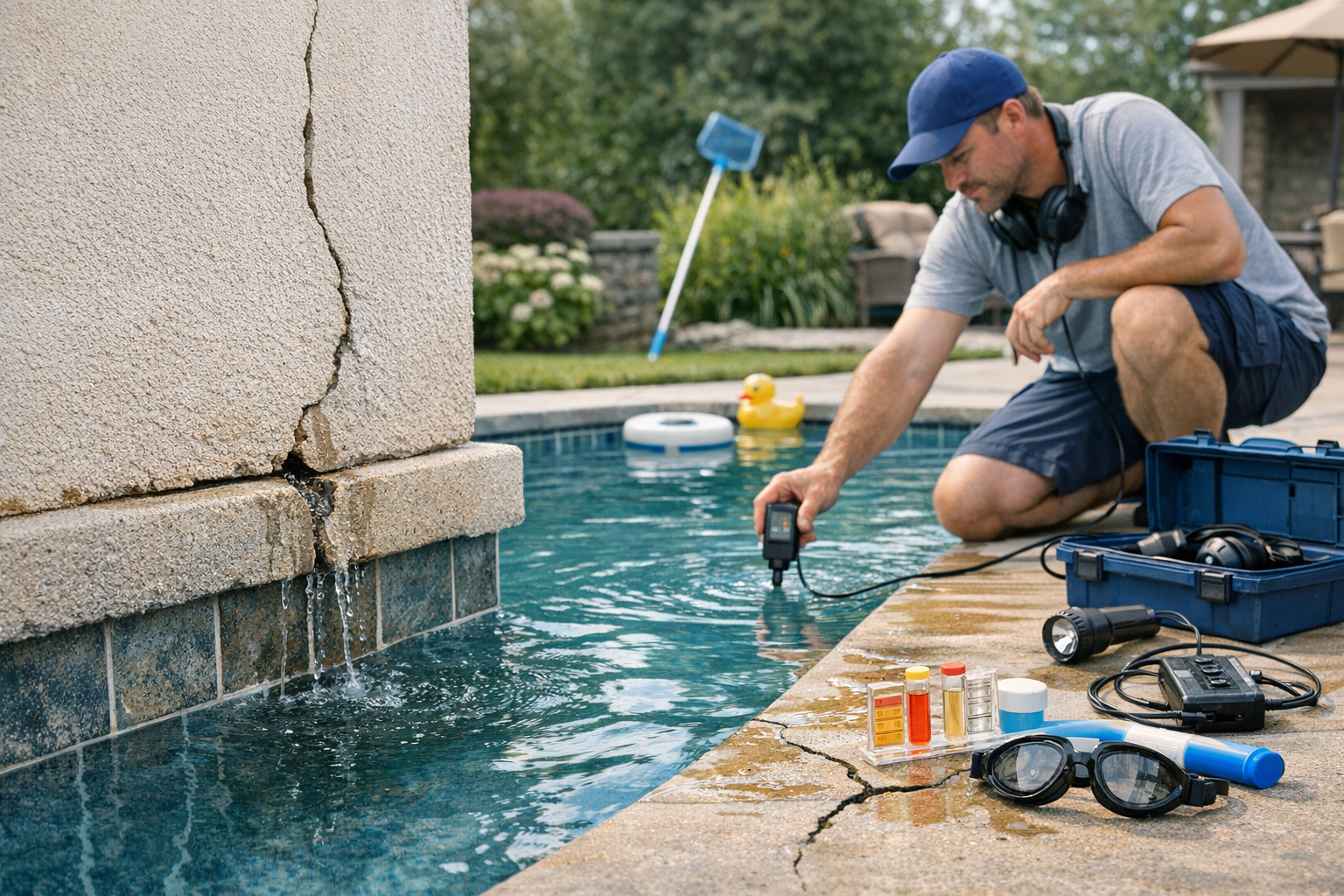
Cracks in a concrete pool, gaps around fittings, or separating tiles may allow water to escape. A crack does not always mean there is a leak; some may be cosmetic or related to normal movement. However, a changing crack or one accompanied by water loss should be checked.
- Inspect the shell, tile line, steps, lights, and skimmer area.
- Note whether cracks appear to be growing or spreading.
- Avoid trying to seal structural cracks before their cause is understood.
4. Air in the Pool System or Weak Water Flow
A plumbing leak on the suction side can let air enter the system. You might see bubbles returning to the pool, notice a pump basket that won’t stay full, or experience inconsistent circulation. These symptoms can also result from a clogged basket, low water level, or loose connection, so consider them alongside other clues.
- Check whether bubbles continue after the pump has been running.
- Look for drips or dampness around visible equipment connections.
- Switch off equipment before inspecting or handling electrical components.
5. Higher Water or Chemical Bills
A leak can increase both water use and the amount of chemicals needed to maintain the pool. If you’re filling the pool more often, you may also be adding chemicals more frequently to restore the correct balance. A sudden change in utility costs can be a useful prompt to investigate.
- Compare recent water bills with the same season in previous years.
- Track how often you refill the pool.
- Check chemical readings before assuming a leak is the cause.
6. Deck Movement or Nearby Structural Changes
Water escaping beneath a pool can sometimes wash away soil and contribute to shifting ground. Signs may include a sinking deck, new gaps between the coping and deck, or uneven paving. These changes have other possible causes, but they should not be ignored when the pool is losing water.
- Look for new uneven areas or widening gaps.
- Keep people away from unstable or sinking sections.
- Ask a pool professional to assess both the water loss and surrounding structure.
How to Check for a Pool Leak at Home
The bucket test can help you compare pool water loss with evaporation. Place a bucket on a pool step so it is partly submerged and secure it so it cannot float or tip. Fill the bucket with pool water until the level inside matches the water level outside. Mark both levels, then compare them after 24 hours, ideally with the pump off for part of the test and again with it running. Follow the bucket manufacturer’s safety guidance and keep children away from the setup.
If the pool level falls more than the water inside the bucket, a leak is more likely. If both levels fall by a similar amount, evaporation may explain much of the loss. The test is an indicator, not a precise diagnosis, and weather or splashing can affect results.
- Choose a period without rain or unusually heavy pool use.
- Use clear marks and record the results.
- Repeat the test if conditions changed significantly.
What to Do If You Suspect a Leak
Keep a simple record of water levels, refill frequency, weather, and any visible changes. Avoid draining the pool unless a qualified professional advises it, since draining can damage some pool types or create structural risks. If water loss is substantial, the ground is shifting, or the leak may involve buried plumbing, contact a pool leak detection specialist.
- Share your observations and bucket-test results with the professional.
- Ask whether pressure testing or specialized leak detection is appropriate.
- Address electrical or structural hazards promptly.
Conclusion
Frequent refilling, persistent wet spots, cracks, air bubbles, and shifting pool decking can all point to a leak. A careful water-level check can help distinguish a leak from evaporation, but professional testing is the best next step when the signs persist. Acting early can help limit water waste and protect your pool and yard.