
Why Pool Leak Detection Matters
A small pool leak can be easy to overlook, especially during hot weather when evaporation is normal. But when water loss continues, it may waste water, increase utility bills, damage nearby landscaping, or put extra strain on pool equipment. Professional pool leak detection services help pinpoint the source of the problem so repairs can be planned before a minor issue grows.
Leaks can occur in the pool shell, plumbing lines, fittings, lights, or equipment. Because water may travel away from its original source, the wet spot you notice is not always directly above the leak. A trained technician uses testing methods to narrow down the location rather than relying on guesswork.
- Find the likely source of unexplained water loss.
- Reduce unnecessary water and chemical use.
- Help prevent erosion, surface damage, and equipment problems.
Common Signs Your Pool May Have a Leak
Pool water levels naturally drop through evaporation and splash-out. The key is to look for a consistent or unusual change, especially when the pool is not being used much. A leak may also show up as a change around the pool or in how the equipment operates.
- Frequent refilling: You need to add water more often than usual, even during mild weather.
- Wet or sinking areas: Soil, paving, or landscaping near the pool stays damp or begins to settle.
- Cracks or loose fittings: New damage, missing grout, or movement around tiles may warrant an inspection.
- Equipment changes: The pump loses prime, air appears in the return lines, or pressure readings become inconsistent.
- Unexplained chemical use: Water balance becomes harder to maintain as fresh water is repeatedly added.
These clues do not prove there is a leak. Weather, heavy use, and maintenance issues can cause similar symptoms. A simple bucket test can help compare water loss in the pool with evaporation, but a professional inspection is useful when the loss continues or the source is unclear.
What Happens During Professional Leak Detection?
A pool leak detection service usually begins with a conversation about the pool, recent water loss, and any changes you have noticed. The technician may inspect the pool and equipment area, then use a combination of tests to identify whether the issue is in the shell, plumbing, or another component. The exact process depends on the pool design and the symptoms.
- Visual inspection: The technician checks surfaces, fittings, skimmers, drains, lights, and accessible equipment for visible signs of damage.
- Water-loss testing: A bucket test or another controlled test may help distinguish leakage from normal evaporation.
- Plumbing checks: Lines may be isolated and pressure-tested to see whether they hold pressure.
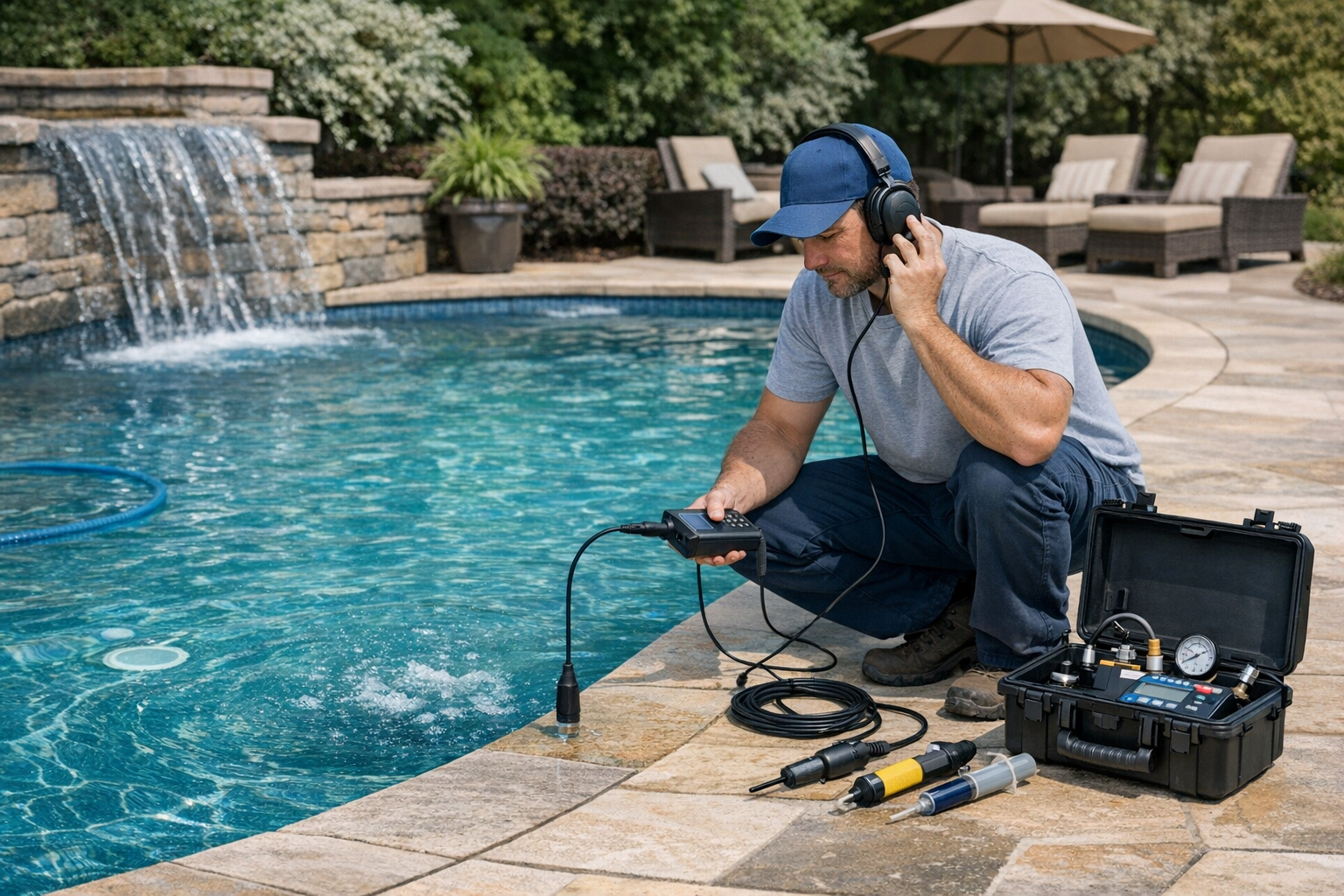
- Specialized locating: Dye testing, acoustic listening equipment, or other tools may help locate a leak more precisely.
Not every pool needs every test. A good technician explains what each step can reveal, what it cannot confirm, and whether additional access or testing is needed. Detection and repair are sometimes separate services, so ask whether the quote includes diagnosis only or also covers the repair.
Pool Leak Detection Methods Explained
Dye Testing
For a suspected leak around a fitting or crack, a technician may release a small amount of dye nearby while the water is still. If the dye is drawn toward a specific point, that can indicate water movement through an opening. This method is most useful for accessible areas and does not replace plumbing tests.
Pressure Testing
Pressure testing checks whether a plumbing line can maintain pressure when isolated. If the pressure drops, the line may have a leak. This can help identify a problem in a return, suction, or other pool line, though further locating may be needed to find the exact spot.
Acoustic and Other Locating Tools
Some professionals use listening equipment to detect water escaping from underground pipes. Depending on the pool and site conditions, technicians may also use other specialized tools. Ask which method is appropriate for your pool and how the results will guide the next step.
- Testing is chosen based on the suspected leak location.
- Some leaks require more than one method to confirm.
- Accurate diagnosis can help avoid unnecessary digging or repairs.
Choosing a Pool Leak Detection Service
Look for a provider with experience working on your pool type and a clear process for reporting findings. A helpful service should explain the inspection, discuss likely next steps, and distinguish confirmed results from possibilities. Local licensing, insurance, and any applicable certifications are also worth checking.
- Ask whether the service fee includes a written report or just verbal findings.
- Find out if repairs are offered separately and whether you can choose another repair company.
- Request an estimate that explains potential additional charges before work begins.
- Check recent reviews for comments about communication, punctuality, and follow-up.
- Ask what access the technician will need and whether the pool should be running or shut off.
Be cautious of promises to find every leak instantly or quotes that do not explain what is included. Pools vary, and some leaks are harder to locate than others. A reliable provider will set realistic expectations and talk through any limitations.
Costs and Preparing for an Inspection
Pool leak detection costs vary by location, pool size, plumbing layout, and the tests required. A straightforward inspection may cost less than diagnosing a difficult underground plumbing leak. The quote may also be affected by access requirements, travel, or whether testing needs to be repeated. Request pricing in advance and confirm what happens if the source is not found during the first visit.
You can make the appointment more productive by noting when water loss occurs and what you have already checked. Avoid draining the pool unless a qualified professional specifically recommends it; lowering the water can cause damage in some conditions.
- Record how often you add water and approximately how much.
- Share recent changes in pump operation, water chemistry, or pool use.
- Clear access to the equipment pad and remove pool toys or covers if requested.
- Ask whether the technician needs the pump operating during any part of the visit.
Conclusion
Pool leak detection services can help turn unexplained water loss into a clear diagnosis and practical next steps. Watch for persistent changes, choose an experienced provider, and ask what the inspection includes. Finding the source early can make it easier to plan a suitable repair and protect your pool area.