
A small leak in an above-ground pool can waste water, raise your utility bill, and soften the ground around the pool. The good news is that many leaks can be located and repaired with basic supplies. The key is to identify whether the problem is in the liner, a fitting, or the circulation system before choosing a repair.
How to Tell If Your Above-Ground Pool Is Leaking
Pool water naturally evaporates, especially on hot, windy days. To check whether water loss is unusual, use a simple bucket test. Fill a bucket with pool water and set it on a pool step, keeping the water inside the bucket close to the pool’s level. Mark both waterlines and compare them after 24 hours, with the pump running as usual. If the pool level drops more than the bucket’s, a leak is likely.
- Check the ground around the pool for persistently wet or muddy spots.
- Look for a pool level that keeps dropping below the same point.
- Notice whether the pump loses pressure or needs frequent topping up.
Rain, splashing, backwashing, and evaporation can all affect water levels, so repeat the test if conditions are unusual. A leak may also appear only while the pump is running, which can point to plumbing or equipment rather than the liner.
Find the Source of the Leak
Inspect the liner and pool fittings
Walk around the outside of the pool and look for wet areas, then inspect the liner from inside. Pay close attention to seams, corners, wrinkles, and spots near ladders, skimmers, and return jets. A flashlight can help reveal small tears or pinholes. Avoid pressing hard on a suspected weak spot.
- Check around the skimmer faceplate and return fitting for dampness or loose parts.
- Look for punctures, scratches, or seams that are beginning to separate.
- Inspect hoses, clamps, valves, and the filter area for drips when the pump is operating.
Use the dye test
If you cannot see the leak, turn off the pump so the water is still. Slowly release a small amount of pool leak-detection dye near a suspected spot. If the dye is drawn toward the liner or fitting, you may have found the leak. Test one area at a time and move slowly; currents can make the result difficult to interpret.
- Start with visible tears and the areas around fittings.
- Keep the dye close to the surface you are testing.
- Follow the product directions and use a pool-safe dye.
Repair a Small Liner Leak
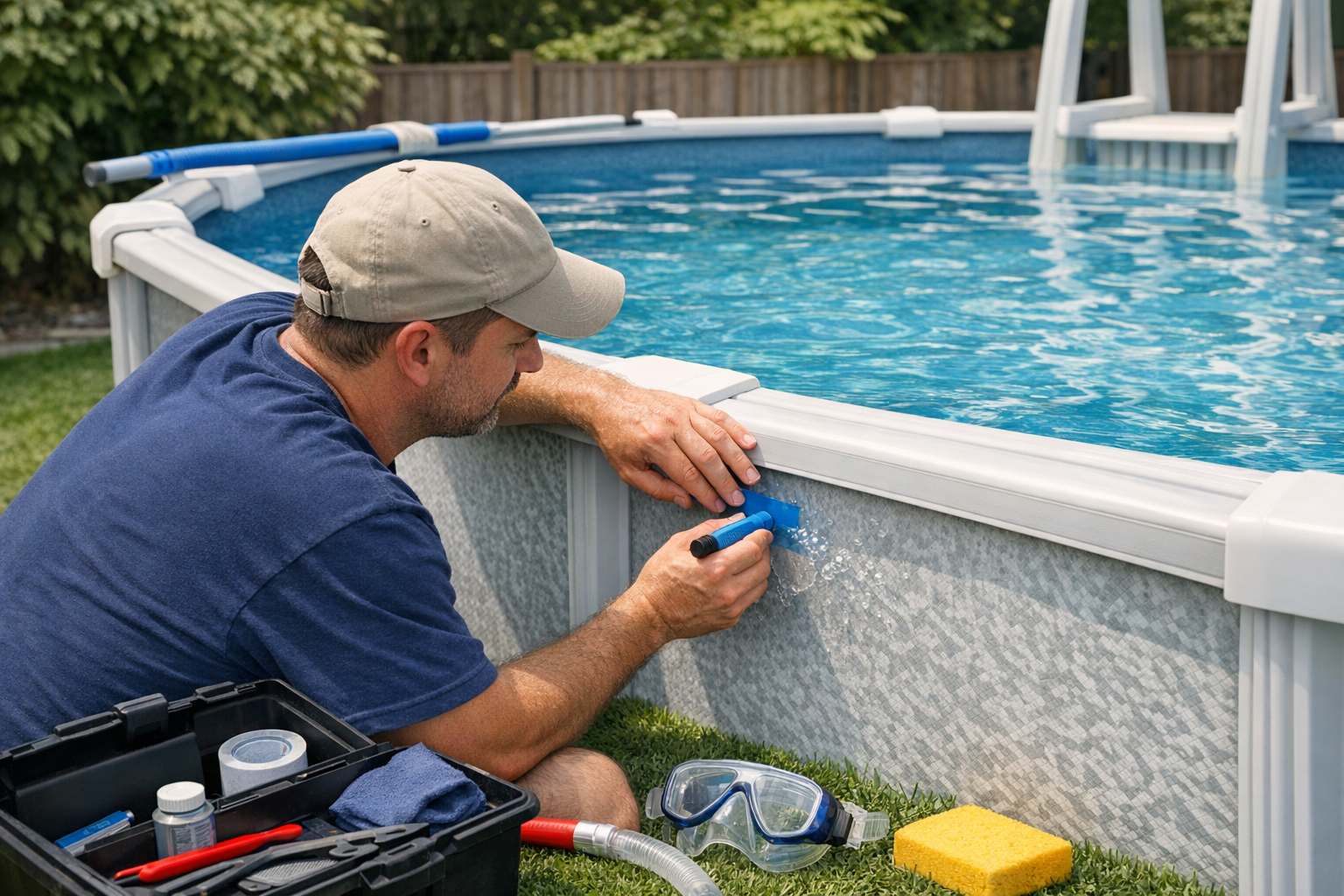
Most pinholes and small tears can be fixed with a vinyl pool repair kit. Choose a kit labeled for pool liners, and follow its instructions. Many kits include a patch that can be applied underwater, so you usually do not need to drain the pool. Keeping water in the pool also supports the liner and pool walls.
- Clean the area gently to remove dirt, algae, and sunscreen residue.
- Cut a round or oval patch that extends at least an inch beyond the damaged area.
- Apply adhesive as directed, fold the patch if required, and press it firmly over the leak.
- Smooth out trapped air and hold the patch in place for the time specified on the kit.
For a repair above the waterline, a dry patch may be easier to apply. Lower the water only as much as necessary, and do not empty an above-ground pool unless the manufacturer or a pool professional advises it. A fully drained pool can leave the liner slack or put the structure at risk. If the tear is large, near a seam, or continues to spread, get professional advice rather than relying on a patch.
Fix Leaks Around Fittings and Plumbing
Water leaking around a skimmer or return jet may come from a gasket, faceplate, or fitting connection. Turn off the pump before working on pool equipment. Check the manufacturer’s guidance before tightening anything: over-tightening screws or plastic connections can crack parts and make the leak worse. Replace worn gaskets with the correct type and size.
- Switch off the pump and follow electrical safety instructions before inspection.
- Look for cracked housings, damaged threads, loose clamps, or flattened gaskets.
- Replace worn components instead of trying to seal a broken part with household glue.
- For underground plumbing leaks or persistent equipment drips, contact a pool professional.
After a repair, restart the pump and watch the area closely. Check again after several hours and the next day to confirm that the leak has stopped.
Prevent Future Pool Leaks
Careful maintenance can help protect a vinyl liner and catch small problems before they grow. Keep sharp toys and tools away from the pool, trim nearby branches, and avoid dragging ladders or equipment across the liner. Use pool chemicals according to their labels; poorly balanced water can contribute to liner wear.
- Inspect seams, fittings, and hoses at the start of each swimming season.
- Keep the water chemistry within recommended ranges.
- Use a pool cover carefully and remove debris that could abrade the liner.
- Address small drips or punctures promptly, before water undermines the surrounding ground.
Conclusion
To repair a leak in an above-ground pool, first confirm water loss, locate its source, and match the repair to the problem. Small liner holes often respond to a pool-rated patch, while damaged fittings or plumbing may need replacement. When in doubt, protect the pool structure and ask a professional to assess the repair.