
Detecting Leaks in Older Pools
Older pools have plenty of charm, but they can also develop hidden leaks over time. Worn plumbing, aging liners, cracked plaster, and shifting ground all increase the chance of water loss. The challenge is that not every drop of water disappearing from your pool means there is a leak. Evaporation, splash-out, and normal maintenance can all lower the water level too.
If you own an older pool, learning how to spot the difference between normal water loss and an actual leak can save time, money, and frustration. The good news is that many leaks can be detected with a few simple checks before they turn into expensive repairs.
- Older pools are more vulnerable to wear and tear.
- Some water loss is normal, but consistent drops may signal a problem.
- Early detection helps protect equipment, decking, and the pool structure.
Common Signs Your Older Pool May Be Leaking
The first step in leak detection is knowing what to look for. While some signs are obvious, others are subtle and easy to overlook. A pool that seems to need frequent refilling is often trying to tell you something.
- Frequent water level drops: If the pool loses more water than expected between refills, a leak may be present.
- Damp spots around the pool: Wet areas in the yard, soft soil, or soggy patches near equipment can point to underground leaks.
- Air in the system: Bubbles in the return jets or sputtering in the pump can indicate plumbing issues.
- Higher chemical use: A leaking pool often needs more chlorine and balancing chemicals because fresh water changes the chemistry.
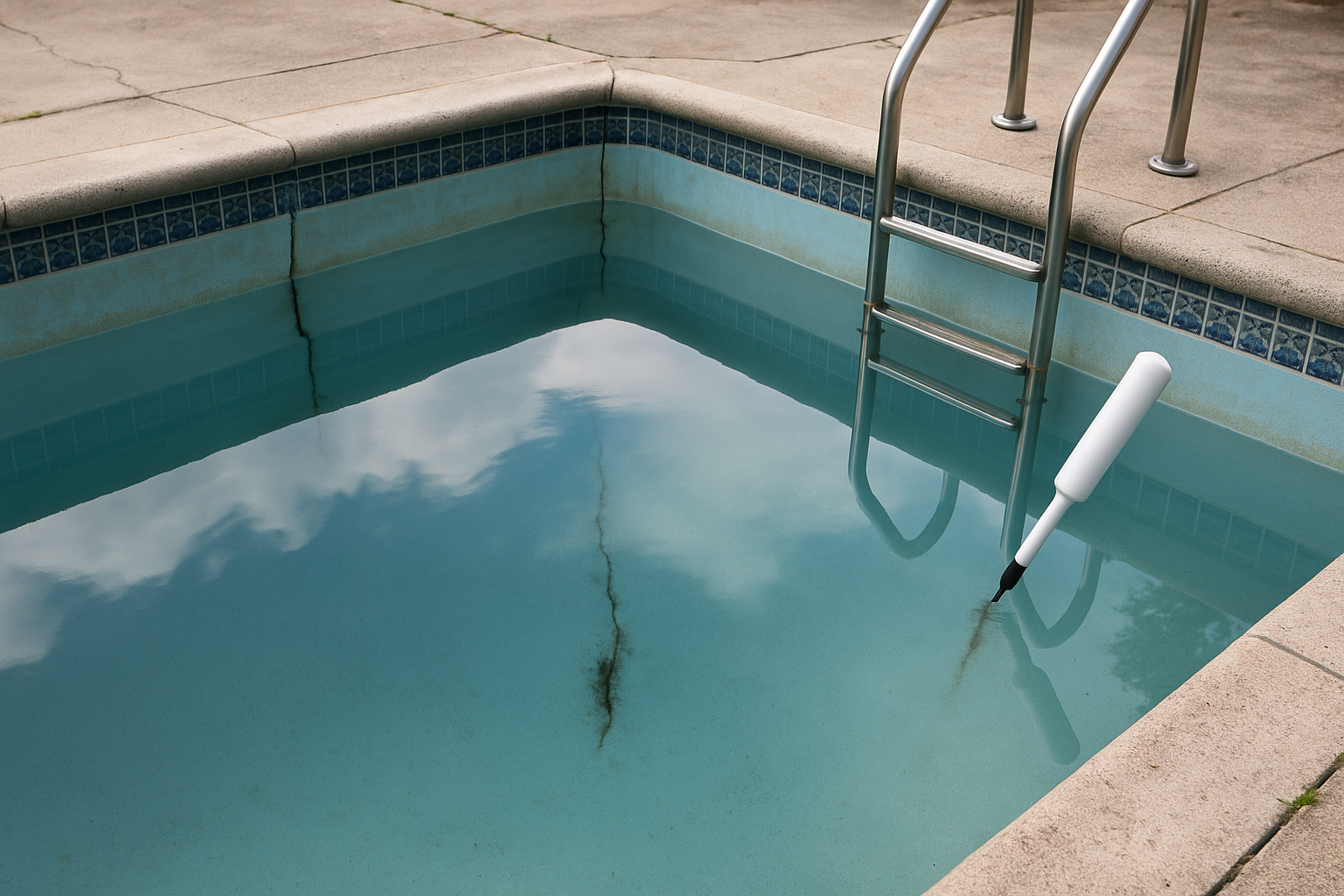
- Cracks or shifting surfaces: Movement in decking, tile, or the pool shell may suggest structural changes related to water loss.
Older pools may show only one of these warning signs, so it helps to pay attention to patterns over time rather than a single incident.
Simple Tests to Detect a Pool Leak
Before calling in a specialist, you can perform a few basic tests to narrow down the source of the leak. These methods are especially useful for older pools because they help distinguish surface evaporation from a real problem.
The Bucket Test
The bucket test is one of the easiest ways to confirm whether your pool is losing more water than normal. It compares water loss in the pool to water loss in a bucket placed on a pool step or bench.
- Fill a bucket with pool water and place it inside the pool.
- Mark the water level inside the bucket and the pool water level outside it.
- Leave the pool pump off for 24 hours.
- If the pool water drops more than the bucket water, a leak is likely.
This test is not a complete diagnosis, but it is a helpful starting point for older pools where evaporation and leaks can look very similar.
Check the Water Loss Rate
Monitor the pool’s water level over several days. Evaporation usually causes gradual loss, especially during hot, windy weather. A leak often creates a more consistent drop, even when the weather is mild.
- Mark the water level with tape or a pencil on the tile line.
- Measure at the same time each day.
- Compare the changes to recent weather conditions.
If the level drops quickly and steadily, it may be time to investigate further.
Where Leaks Commonly Develop in Older Pools
Older pools tend to leak in predictable places. Knowing the most common weak points can help you focus your inspection and avoid unnecessary guesswork.
- Skimmers: Cracks around the skimmer throat or body can allow water to escape.
- Return lines: Aging plumbing connections may loosen, crack, or separate underground.
- Main drains: Gaskets and fittings can deteriorate over time.
- Lights and fittings: Old light niches and wall fittings may develop slow leaks.
- Plaster or liner surfaces: Hairline cracks, punctures, or worn areas can create small but steady water loss.
- Pump and filter equipment: Leaks near equipment pads are often easier to see but still deserve attention.
In many older pools, more than one leak may be present, especially if the pool has had years of repairs or shifting soil beneath it.
How to Narrow Down the Leak Source
Once you know the pool is losing water, the next step is determining whether the leak is in the structure, plumbing, or equipment. This distinction matters because each type of leak requires a different repair approach.
- Turn the pump off: If the water loss slows or stops, the leak may be in the plumbing or equipment that only runs when the system is active.
- Inspect the equipment pad: Look for dripping valves, wet unions, or corroded fittings.
- Examine the pool shell: Check for visible cracks, missing grout, or damaged tile.
- Test specific areas: Use dye near suspected cracks, fittings, or skimmer seams to see if water is being pulled out.
For older pools with complex plumbing, it may help to isolate lines one by one. This is often the fastest way to determine whether the issue is in a return line, suction line, or a surface opening.
When to Call a Pool Leak Detection Professional
Some leaks are easy to spot, but many older pools have hidden damage that is difficult to locate without specialized tools. If your pool is losing water and you cannot identify the source, a professional leak inspection can prevent wasted time and repeated patching.
- The pool loses water quickly even after simple tests.
- You suspect underground plumbing damage.
- There are multiple possible leak points.
- The pool has an older shell, liner, or plumbing system.
- You want a precise repair plan before opening walls or digging.
Professionals often use pressure testing, electronic listening equipment, dye testing, and specialized cameras to find leaks with far less guesswork. That can be especially valuable for older pools where hidden damage is common.
Preventing Future Leaks in Older Pools
Once a leak is repaired, preventative care can help extend the life of the pool and reduce the chance of new problems. A proactive approach is especially important for aging pool systems.
- Schedule regular inspections of skimmers, fittings, and visible plumbing.
- Keep water chemistry balanced to protect plaster, grout, and metal parts.
- Address small cracks early before they widen.
- Watch for shifting soil or deck movement near the pool.
- Service pumps, filters, and valves to reduce stress on the system.
Consistent maintenance can make a big difference, especially in older pools that already have years of wear behind them.
Conclusion
Detecting leaks in older pools starts with careful observation and a few simple tests. By watching for water loss, checking common problem areas, and knowing when to bring in a professional, you can catch leaks before they cause bigger damage. A little attention now can help protect your pool for many more seasons.