
Older pools can be beautiful, durable, and full of character, but when a leak shows up, repairs are often more complicated than homeowners expect. Unlike newer pools built with modern materials and updated plumbing standards, older pools may have hidden wear, outdated components, and layers of past repairs that make diagnosing the problem difficult. Understanding why leak repair is challenging in aging pools can help you make better decisions, avoid unnecessary costs, and protect your investment.
In many cases, the leak itself is only part of the issue. The real challenge is finding the source, identifying what materials are still sound, and determining whether a targeted repair will actually last. Below, we break down the main reasons older pool leaks are so difficult to fix and what signs to watch for.
Why Older Pool Leaks Are So Hard to Diagnose
Finding a leak in an older pool is often more difficult than repairing it. Over time, pools settle, surfaces degrade, and plumbing systems age unevenly. A leak may be coming from the pool shell, a return line, a skimmer, the main drain, or even equipment pad connections. In older pools, these problems can overlap, making the source harder to isolate.
- Multiple small leaks may exist at the same time.
- Previous patch jobs can conceal the real issue.
- Aging materials may leak only under pressure or temperature changes.
- Cracks and worn seals can mimic plumbing problems.
Professional leak detection often requires pressure testing, dye testing, or specialized listening tools. Even then, the exact source may remain uncertain until some excavation or component removal takes place.
Common Reasons Older Pools Develop Leaks
As pools age, natural wear affects nearly every part of the structure. Some leaks come from the pool itself, while others are hidden in the plumbing network or equipment. The older the pool, the more likely it is that several of these issues are happening at once.
1. Deteriorating Plumbing Lines
Many older pools were built with plumbing materials that have reached or are nearing the end of their lifespan. PVC joints, flexible lines, seals, and fittings can weaken over decades, especially if they were installed under stress or have shifted with soil movement.
- Pipe joints can separate.
- Cracks may form underground where they are not visible.
- Old adhesives and seals can fail over time.
2. Structural Cracks in the Pool Shell
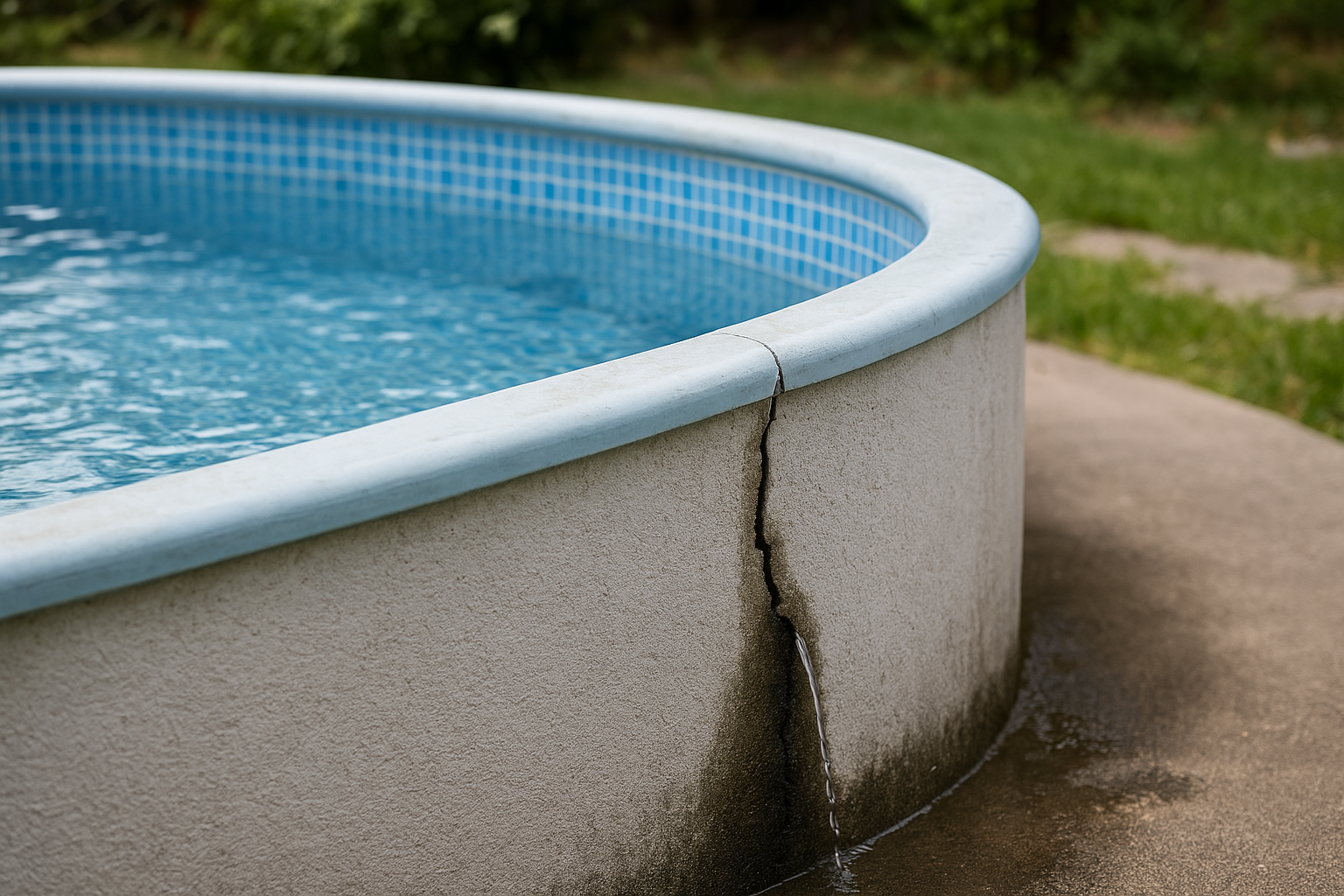
Concrete, plaster, fiberglass, and vinyl-lined pools all age differently, but every pool shell can develop structural vulnerabilities. Small cracks may seem cosmetic at first, but they can widen and allow water to escape steadily.
- Settlement can stress the shell.
- Freeze-thaw cycles can expand cracks.
- Corrosion around steel reinforcement can damage concrete.
3. Worn Out Fixtures and Fittings
Skimmers, return jets, drains, lights, and fittings often become leak points as the seals and surrounding materials break down. In older pools, these areas may have been repaired multiple times, which can complicate future work.
- Gaskets dry out and shrink.
- Fittings loosen as materials age.
- Past repairs may not match current component sizes.
Why Repairs Are More Complicated Than They Seem
Fixing a leak in an older pool is rarely as simple as sealing the visible crack or replacing one part. Once the leak source is found, a technician must determine whether the surrounding material is still stable enough for a lasting repair. In many cases, the answer is not obvious.
For example, patching one crack in a deteriorating concrete shell may stop the leak temporarily, but another crack may open nearby soon after. Similarly, replacing one old pipe section may not solve the problem if the rest of the line is brittle and failing. That is why older pool leak repair often feels like a balancing act between short-term fixes and long-term reliability.
- Hidden damage may extend beyond the visible leak.
- Repairs can disturb weak surrounding material.
- Older parts may no longer be manufactured.
- Matching finishes, tile, or liners can be difficult.
Signs Your Older Pool May Have a Leak
Some pool water loss is normal due to evaporation, especially in hot or windy weather. However, older pools tend to lose water more quickly when problems begin. Catching the warning signs early can help reduce damage and repair costs.
- Water level drops faster than usual.
- Air appears in the pump or return lines.
- Wet spots form near the pool or equipment.
- Higher water bills or chemical use become noticeable.
- The pump loses prime frequently.
If you notice these signs, it is worth scheduling a professional inspection sooner rather than later. Waiting too long can allow soil erosion, deck damage, or structural deterioration to worsen.
What Makes Leak Repair Cost More in Older Pools
One of the biggest surprises for pool owners is how quickly leak repair costs can rise in older pools. Because the problem is often harder to locate and may involve multiple failing parts, the repair process usually requires more labor, more testing, and sometimes more invasive work.
- Leak detection may take longer.
- Excavation may be needed to access underground plumbing.
- Old materials may require custom solutions.
- Additional repairs may be needed once the damage is uncovered.
In some cases, a pool owner may spend more trying to patch recurring issues than they would on a larger renovation or partial system replacement. This is especially true when the pool has widespread age-related wear.
How to Approach Repairs the Smart Way
If you suspect a leak in an older pool, start with a full assessment instead of jumping straight to a patch repair. A thorough inspection can reveal whether the issue is isolated or part of a larger pattern of deterioration. This helps you choose between repair, partial replacement, or renovation.
- Document water loss and visible damage.
- Hire a qualified leak detection specialist.
- Ask about the age and condition of plumbing and fittings.
- Compare repair costs with long-term replacement options.
- Prioritize fixes that address the root cause, not just the symptom.
When handled strategically, even an older pool can continue to perform well for years. The key is understanding that leak repair is often more complex because the pool has aged as a system, not just at a single problem spot.
Conclusion
Repairing leaks in older pools is challenging because multiple aging components often fail at once, hidden damage is common, and past repairs may complicate the diagnosis. The best approach is to identify the full extent of the problem before making quick fixes. With the right inspection and repair plan, you can protect your pool, reduce ongoing water loss, and make smarter decisions about long-term maintenance.