
Misdiagnosis During Pool Leak Repair
A pool leak can be frustrating, expensive, and stressful, especially when the real issue is not what it first appears to be. Misdiagnosis during pool leak repair happens more often than many homeowners realize, and it can lead to wasted money, repeated service calls, and ongoing water loss. A cracked fitting may be blamed when the actual problem is a bad skimmer line. A wet deck may look like a leak, but it could simply be splash-out or drainage issues.
Understanding how misdiagnosis happens is the first step toward solving the problem correctly. With the right approach, you can avoid unnecessary repairs and get your pool back to normal faster.
Common Reasons Pool Leaks Are Misdiagnosed
Pool systems are complex, and leaks do not always show up where the damage is most visible. Water can travel through soil, concrete, plumbing, and equipment pads before it becomes noticeable. That makes pool leak repair especially vulnerable to incorrect assumptions.
- Visible symptoms can be misleading: Water stains, wet soil, or low water levels may appear far from the actual leak source.
- Multiple issues can exist at once: A pool can have a plumbing leak and an evaporation problem at the same time.
- Equipment failures mimic leaks: Worn seals, loose fittings, or cracked pump lids often look like plumbing leaks.
- Inadequate testing: Guessing without pressure testing, dye testing, or inspection tools can lead to the wrong conclusion.
In many cases, the first diagnosis is based on what seems most obvious rather than what has actually been verified.
Signs the Leak May Have Been Misdiagnosed
If a repair was completed but the water loss continues, the original diagnosis may have been wrong. Paying attention to these warning signs can help you catch the issue before more damage is done.
- The pool is still losing water after the repair.
- New wet spots appear in different areas around the pool or equipment.
- The pump loses prime or runs differently than before.
- Air bubbles continue coming from return lines.
- The water level drops only when the system is on, suggesting a pressure-side plumbing leak.
These clues often indicate that the problem was not fully isolated the first time. A correct diagnosis should explain both when the water is leaking and where it is escaping.
How Misdiagnosis During Pool Leak Repair Happens
Misdiagnosis often starts with rushed troubleshooting. A technician or homeowner may focus on the easiest-to-see issue instead of tracing the source methodically. While some leaks are straightforward, many require a step-by-step process to confirm the exact failure point.
Common causes of misdiagnosis include:
- Skipping a full inspection: Failing to inspect the pool shell, fittings, skimmer, returns, lights, and equipment can leave the real leak hidden.
- Assuming the pump is the problem: A pump-area leak may actually originate from plumbing underground or from another component nearby.
- Not separating evaporation from leakage: Hot weather, wind, and splash-out can make normal water loss seem like a serious leak.
- Ignoring pool structure movement: Soil shifting, settling, and freeze-thaw cycles can open cracks that are easy to overlook.
Because water follows the path of least resistance, the visible damage is not always the source of the problem. That is why methodical testing matters so much.
Why Accurate Leak Detection Matters
Accurate leak detection saves time, money, and frustration. It also protects the pool from additional structural damage. When leaks are repaired incorrectly, the water loss continues, and the hidden issue can worsen over time.
- Prevents repeat repairs: Fixing the wrong part means paying again for the same unresolved issue.
- Protects the pool structure: Ongoing water loss can undermine the deck, wash out soil, and weaken the shell.
- Reduces chemical waste: A leaking pool needs more water balancing and chemicals to stay stable.
- Helps avoid equipment strain: Low water levels can damage pumps, heaters, and filtration systems.
The longer a leak goes unresolved, the more expensive the consequences can become. Accurate diagnosis is not just about convenience; it is about preserving the long-term health of the pool.
How to Avoid a Pool Leak Misdiagnosis
Preventing misdiagnosis begins with a careful, evidence-based approach. Whether you are troubleshooting the issue yourself or hiring a professional, the goal is to confirm the source before any repair work starts.
- Document water loss: Track the water level over several days and note when the loss happens.
- Check for evaporation: Perform a bucket test to compare evaporation against actual water loss.
- Inspect all likely leak points: Look at skimmers, returns, drains, lights, fittings, valves, and visible plumbing.
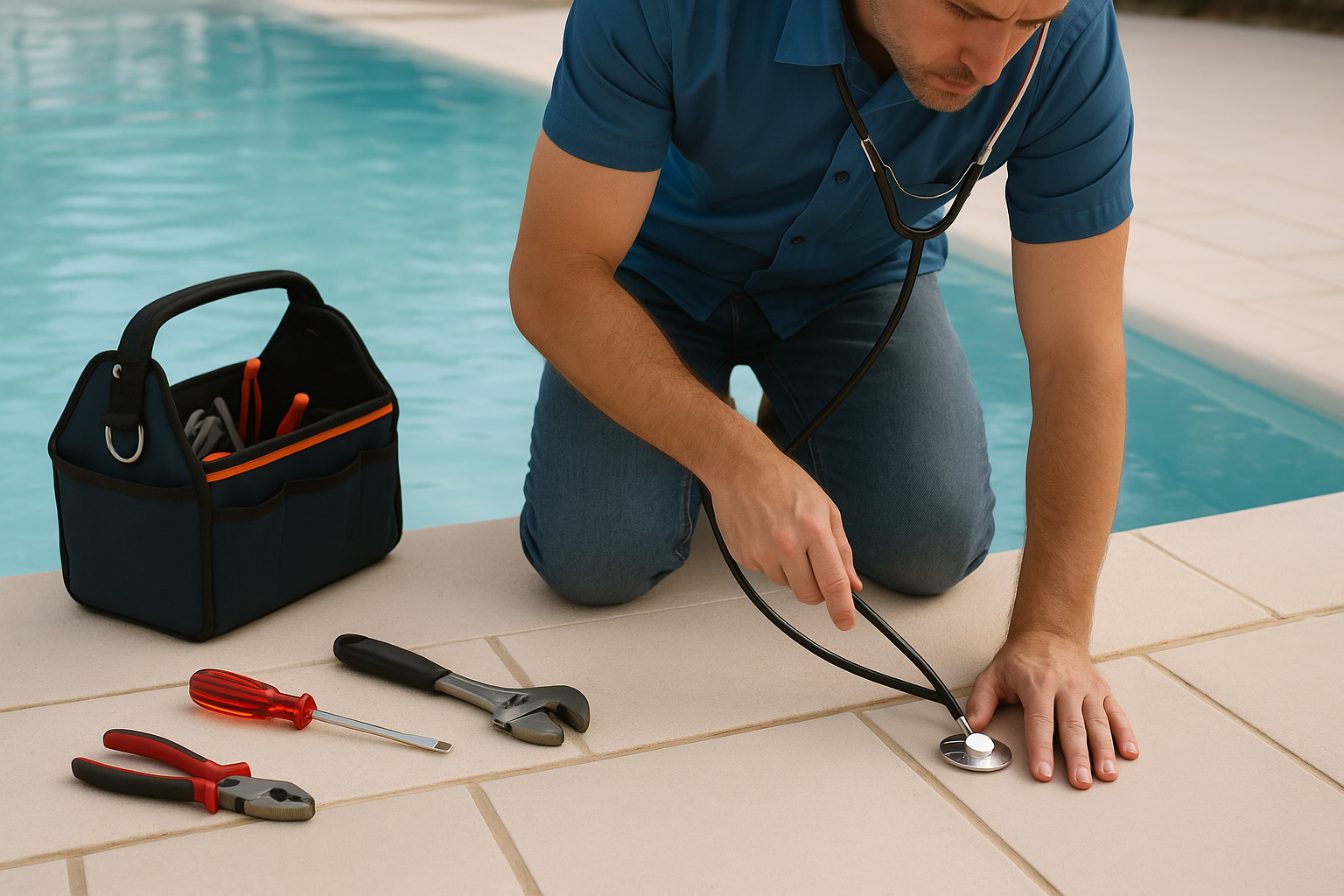
- Use proper testing methods: Dye testing, pressure testing, and acoustic detection can help narrow down the source.
- Work with experienced professionals: A trained pool leak specialist is more likely to diagnose the problem correctly the first time.
One of the biggest mistakes pool owners make is approving repairs too quickly. Taking time to verify the leak can prevent unnecessary excavation or part replacement.
Questions to Ask Before Approving a Repair
If a contractor identifies a leak, it is smart to ask a few questions before moving forward. A reputable technician should be able to explain how the diagnosis was made and what evidence supports the repair plan.
- How was the leak located?
- What testing methods were used?
- Is the repair addressing the source or just the symptom?
- Could more than one leak be involved?
- What happens if the water loss continues after the repair?
Clear answers can help you feel confident that the problem has been identified correctly. If the explanation is vague or based mostly on guesswork, it may be worth getting a second opinion.
Conclusion
Misdiagnosis during pool leak repair can turn a manageable issue into a costly and ongoing headache. Because pool water can travel far from the actual failure point, the visible signs are not always enough to identify the true cause. Careful testing, thorough inspection, and expert troubleshooting are the best ways to avoid mistakes and ensure the repair lasts.
If your pool is losing water, take the time to confirm the source before approving repairs. The right diagnosis can save you money, protect your pool, and restore peace of mind.