
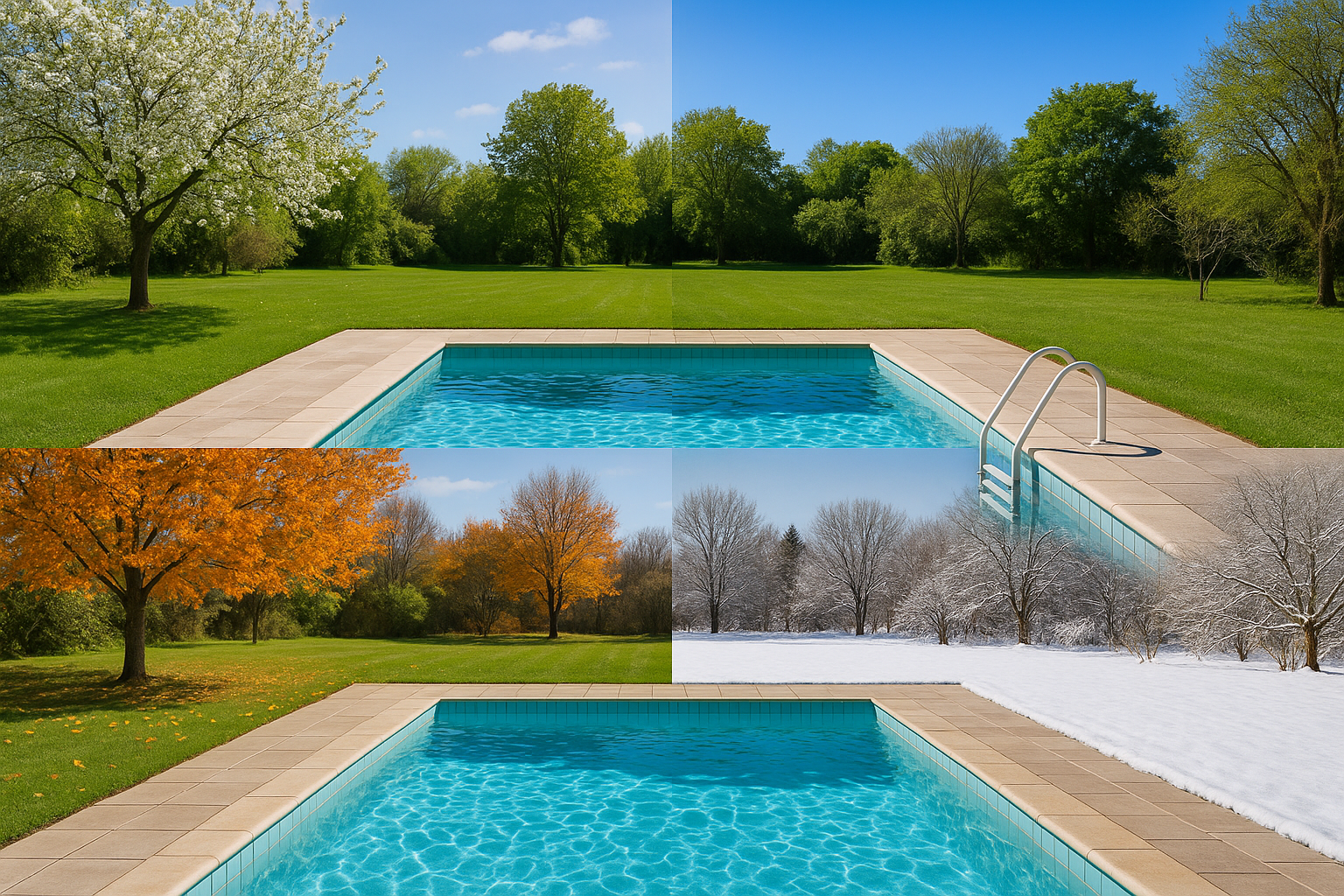
Pool leaks can happen at any time, but they often become easier to notice—or more severe—during certain seasons. Changes in temperature, rainfall, humidity, and pool usage all affect how water moves through your pool system. If you understand seasonal variations in pool leakage, you can spot problems earlier, reduce water loss, and avoid costly repairs.
Below, we’ll break down how pool leaks behave across the year, what warning signs to watch for, and how to protect your pool in every season.
Why Pool Leaks Change With the Seasons
Pool structures and plumbing are constantly responding to environmental conditions. When temperatures rise and fall, materials expand and contract. Rain, evaporation, and ground movement also change how easily a leak shows up.
That means a small issue may seem minor in one season and much worse in another. Seasonal shifts can affect:
- The rate of water loss
- The visibility of cracks or gaps
- Pressure on pipes, fittings, and seals
- Evaporation levels that can hide or mimic a leak
Temperature Fluctuations Matter
Warm weather can cause pool surfaces and plumbing components to expand, while cooler temperatures can make them contract. Over time, this movement can loosen fittings, weaken seals, and open tiny cracks.
- Expansion may widen existing weak points
- Contraction may create new gaps in joints or plumbing
- Repeated cycling increases stress on older systems
Because of this, some leaks only appear during specific temperature ranges or become more noticeable when the weather shifts quickly.
How Spring and Summer Affect Pool Leakage
Spring and summer are the most active pool seasons, which means leaks often become easier to detect. At the same time, evaporation is typically higher, so it can be harder to tell whether water loss is caused by a leak or the weather.
During warmer months, pool owners should pay close attention to water levels, equipment performance, and visible moisture around the pool area.
Higher Evaporation Can Hide Leaks
In hot weather, pools naturally lose more water to evaporation. Wind, direct sunlight, and low humidity can all accelerate the process. As a result, a leak may blend in with normal water loss.
- Expect some water loss in hot, dry conditions
- Check water levels at the same time each day for consistency
- Compare evaporation rates to see if the loss is unusually high
If your pool needs frequent refilling in summer, the cause may be more than evaporation alone.
Increased Usage Can Expose Problems
More swimmers, more filtration, and more backwashing can place extra strain on your pool system. This added activity can expose weak valves, worn gaskets, or plumbing leaks.
- Look for air bubbles in return lines
- Watch for damp spots near pumps and filters
- Listen for unusual sounds from the equipment pad
Seasonal maintenance is especially important during this period because high usage can speed up the growth of small leaks into larger ones.
How Fall and Winter Influence Pool Leakage
Fall and winter bring cooler temperatures, changing precipitation, and often reduced pool use. These conditions can reveal leaks in different ways. Even if your pool is not used as often, water loss can continue through structural cracks, plumbing issues, or failing seals.
In many cases, leaks become more visible once evaporation slows down and the pool is less active.
Cooling Temperatures Can Reveal Structural Weaknesses
As temperatures drop, pool surfaces and plumbing contract. This can open up cracks that were previously sealed by warmer conditions. Older pools, especially those with aging plaster or shifting soil, may show new signs of leakage in cooler weather.
- Watch for cracks that grow or change shape
- Check tile lines and skimmers for separation
- Inspect expansion joints before colder months begin
These changes often make fall an important time for inspection and preventive repair.
Rainfall and Ground Movement Add Pressure
Seasonal rain can saturate the soil around your pool. When the ground shifts, it may place pressure on the shell, plumbing, or surrounding deck. In some cases, groundwater can make it harder to tell where pool water is going.
- Heavy rain may mask a leak temporarily
- Soil movement can stress underground plumbing
- Standing water around the pool may point to drainage or leak issues
Winter can also create complications in colder climates, especially if pipes are exposed to freezing temperatures. Frozen water expands, which can crack pipes and fittings if the system is not properly winterized.
Common Seasonal Signs of Pool Leakage
While seasonal conditions change, several warning signs remain consistent. Paying attention to these clues can help you catch a leak early, no matter the time of year.
- Water level drops faster than normal
- Wet or soft ground near the pool
- Cracks in the deck, tile, or plaster
- Unexplained air in the plumbing system
- Higher-than-usual water bills
- Algae growth from improper chemical balance caused by water loss
If these symptoms appear alongside a seasonal change, it is worth investigating further.
How to Test for Seasonal Pool Leaks
Simple testing can help determine whether water loss is due to evaporation or an actual leak. Performing checks during different seasons gives you a clearer picture of your pool’s condition.
Try the 24 Hour On/Off Test
Completing the 24-hour on/off test is the best approach to getting a good idea of whether your pool is leaking. Follow these steps, and call us at (940) 484-4468 with your results. We can help you decide the best approach to locating the leak.
Inspect Equipment and Plumbing
Seasonal leaks often begin at pumps, filters, skimmers, valves, and return lines. A careful inspection can help you find the source before the damage spreads.
- Look for drips around unions and fittings
- Check for pressure changes in the system
- Review the equipment pad after temperature swings or storms
If the source is hidden underground or behind the pool shell, professional leak detection may be the best next step.
Preventing Seasonal Pool Leakage
Preventive care is the best defense against seasonal pool leaks. Regular inspections and timely maintenance can keep small issues from becoming major repairs.
- Schedule seasonal pool checkups in spring and fall
- Monitor water levels weekly
- Winterize plumbing in colder climates
- Seal cracks and replace worn gaskets promptly
- Maintain proper chemical balance to protect surfaces and equipment
Staying proactive not only saves water but also extends the life of your pool system.
Conclusion
Seasonal variations in pool leakage are common, but they do not have to catch you off guard. By understanding how heat, cold, rain, and usage affect your pool, you can identify leaks earlier and take action before they lead to bigger problems. A little seasonal attention goes a long way toward protecting your pool, your equipment, and your wallet.