
How to Find a Pool Leak
A pool losing water faster than normal can be frustrating, expensive, and a little mysterious. The good news is that not every drop of water loss means a major repair. Sometimes evaporation is to blame, but if the water level keeps dropping, you may have a leak that needs attention. Learning how to find a pool leak can help you catch small issues early, protect your equipment, and keep your pool running efficiently.
This guide walks you through the most common signs of a leak, simple tests you can do at home, and the best places to inspect first. With a few careful checks, you can narrow down the problem and decide whether it’s a DIY fix or time to call a pool professional.
Common Signs Your Pool May Be Leaking
Before you start testing, it helps to know what leak symptoms look like. A pool can lose water for several reasons, but a true leak usually comes with a pattern.
- Unusual water loss: If you are adding water more often than usual, especially several inches per week, a leak may be present.
- Wet spots around the pool: Soggy ground, puddles, or soft soil near the pool deck can signal escaping water.
- Air in the pump system: Bubbles in the return lines or a pump that struggles to prime may point to suction-side leaks.
- Cracks or shifting deck areas: Structural movement can sometimes reveal underground plumbing leaks.
- Higher chemical use: A leak can throw off chemical balance, causing you to add more chlorine and other treatments.
If several of these signs appear together, it is worth investigating further.
Step 1: Rule Out Evaporation
Not all water loss is caused by a leak. Heat, wind, and dry weather can all increase evaporation, especially during summer. One of the easiest ways to check is with the 24-HOUR ON/OFF DIAGNOSTIC CYCLE TEST.
How to do the 24-hour on/off test
Step 1 – Fill & Mark
- Fill Up – Fill your pool and or spa to their normal levels. Use tape to mark the water levels.
- Disable Auto-Fill – Turn off the water supply valve if you have an auto-fill system.
- Turn Off Pumps – Turn off all circulation pumps and leave them off for 24 hours (unless freezing conditions are expected).
- Measure – After 24 hours, measure the distance between the original marks and the new water levels in both the pool and the spa.
Step 2 – Refill & 2nd Mark
- Refill – Bring the pool and spa back to their normal levels.
- Run the Pump – Keep the main circulation pump running for 24 hours. Do not use any water features or heat the pool.
- Measure Again – After 24 hours, measure the distance between the original marks and the new water levels.
Step 3 – Check for Leaks
- Evaporation – If your pool lost ¼ inch or less per day, it’s likely just evaporation.
- Possible Leak – If your pool lost over ½ inch per day, it is likely because of a leak.
- Gray Area – Losses between ¼ inch and ½ inch warrant further investigation.
Step 4 – Call Us
Contact Colin Irons Pool Leak Detection and Repairs Service at (940) 367-5621 to schedule a leak consultation with one of our experienced pool leak technicians. We will help you determine the best approach to locate and fix the leak.
Remember to have your pool filled to the correct level, clean, and clear for our technician to perform a detailed leak assessment.
Step 2: Inspect the Pool Shell
Once you suspect a leak, start with the pool itself. Carefully examine the visible surfaces for cracks, tears, or damaged seals. Even small openings can allow a surprising amount of water to escape.
What to look for
- Cracks in concrete or gunite: Hairline cracks can widen over time and should be monitored closely.
- Tears in vinyl liners: Look for small punctures, seam separations, or wrinkles that could hide damage.
- Damaged tile or grout: Missing tile, loose grout, or crumbling edges can indicate a leak path.
- Lights, skimmers, and returns: Check around fittings where seals may deteriorate.
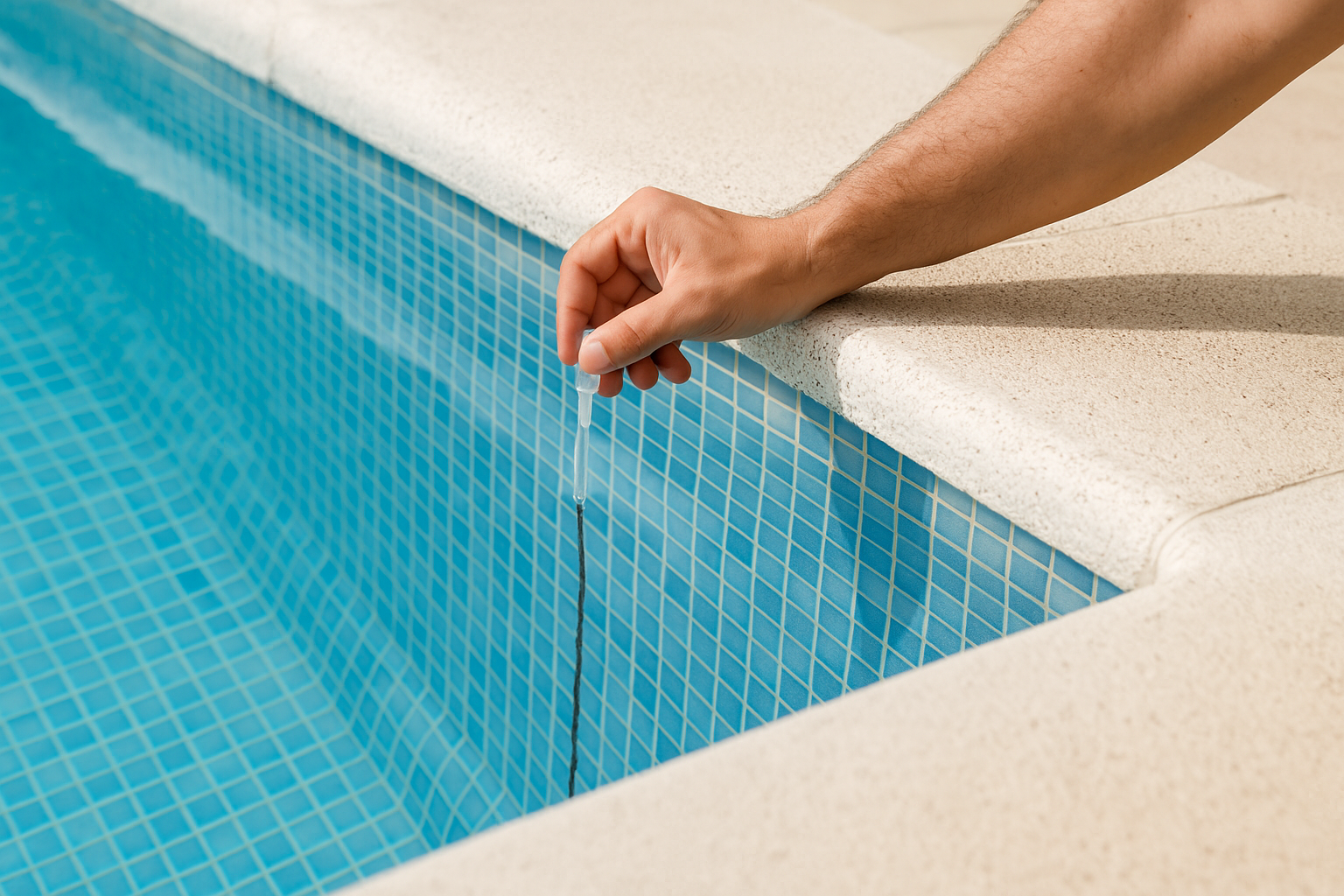
If your pool has a vinyl liner, a dye test can help confirm the leak location. With the pump off and water still, squeeze a small amount of leak-detection dye near a suspected spot. If the dye gets pulled toward a crack or hole, you may have found the source.
Step 3: Check the Plumbing and Equipment
Sometimes the problem is not in the pool shell at all. Leaks can also occur in the plumbing lines, pump, filter, heater, and valves. Equipment leaks are often easier to spot because they leave visible water around the system.
Areas to inspect carefully
- Pump and filter: Look for dripping joints, worn O-rings, or moisture under the equipment pad.
- Multiport valves and unions: These connection points can loosen or crack over time.
- Heater connections: Corrosion, rust, or wet fittings may signal a slow leak.
- Plumbing lines: Underground leaks are harder to detect, but wet soil or unexplained pressure changes can be clues.
Run the system and observe it closely. Sometimes a leak only appears when the pump is on, which can help you identify whether the issue is on the suction side or the return side.
Step 4: Isolate the Leak
If you are unsure whether the leak is in the pool structure or the plumbing, you can use a simple process of elimination. This helps you determine whether the water loss happens with the pump off, on, or both.
- Test with the pump off: If water still drops significantly, the leak may be in the pool shell, fittings, or a line below the waterline.
- Test with the pump on: If the water loss increases when the system runs, the plumbing or equipment may be the culprit.
- Watch the water line: A leak often stops at a certain level, which can indicate the height of the problem area.
This method does not always reveal the exact source, but it narrows your search and saves time.
Step 5: Look for Underground or Hidden Leaks
Some leaks are not visible at all. Underground plumbing leaks can be especially tricky because the water escapes before it reaches the surface. If you suspect a hidden leak, pay attention to indirect signs.
- Unexplained damp patches in the yard
- Sudden drops in system pressure
- Air bubbles returning to the pool
- Wet soil near buried lines or valves
- Changes in water chemistry without another explanation
Professional leak detection tools, such as pressure testing and electronic listening devices, are often the best way to locate buried leaks accurately.
When to Call a Pool Professional
Some leaks are simple enough to patch yourself, but others require specialized equipment and repair experience. If you cannot find the source, or if the leak appears to be in plumbing under concrete or underground, a professional can help prevent unnecessary digging and damage.
It is a good idea to call a pool expert if:
- The water loss is rapid or getting worse
- You suspect underground plumbing damage
- The leak involves electrical components or major equipment
- You have tried basic tests but still cannot locate the problem
Quick action can reduce repair costs and protect your pool from long-term structural issues.
Conclusion
Finding a pool leak takes patience, but a step-by-step approach makes the process much easier. Start by ruling out evaporation, then inspect the pool shell, equipment, and plumbing for obvious signs of trouble. If the leak remains hidden, professional detection can help pinpoint the problem and get your pool back in great shape. The sooner you act, the easier it is to avoid wasted water, higher bills, and bigger repairs.