
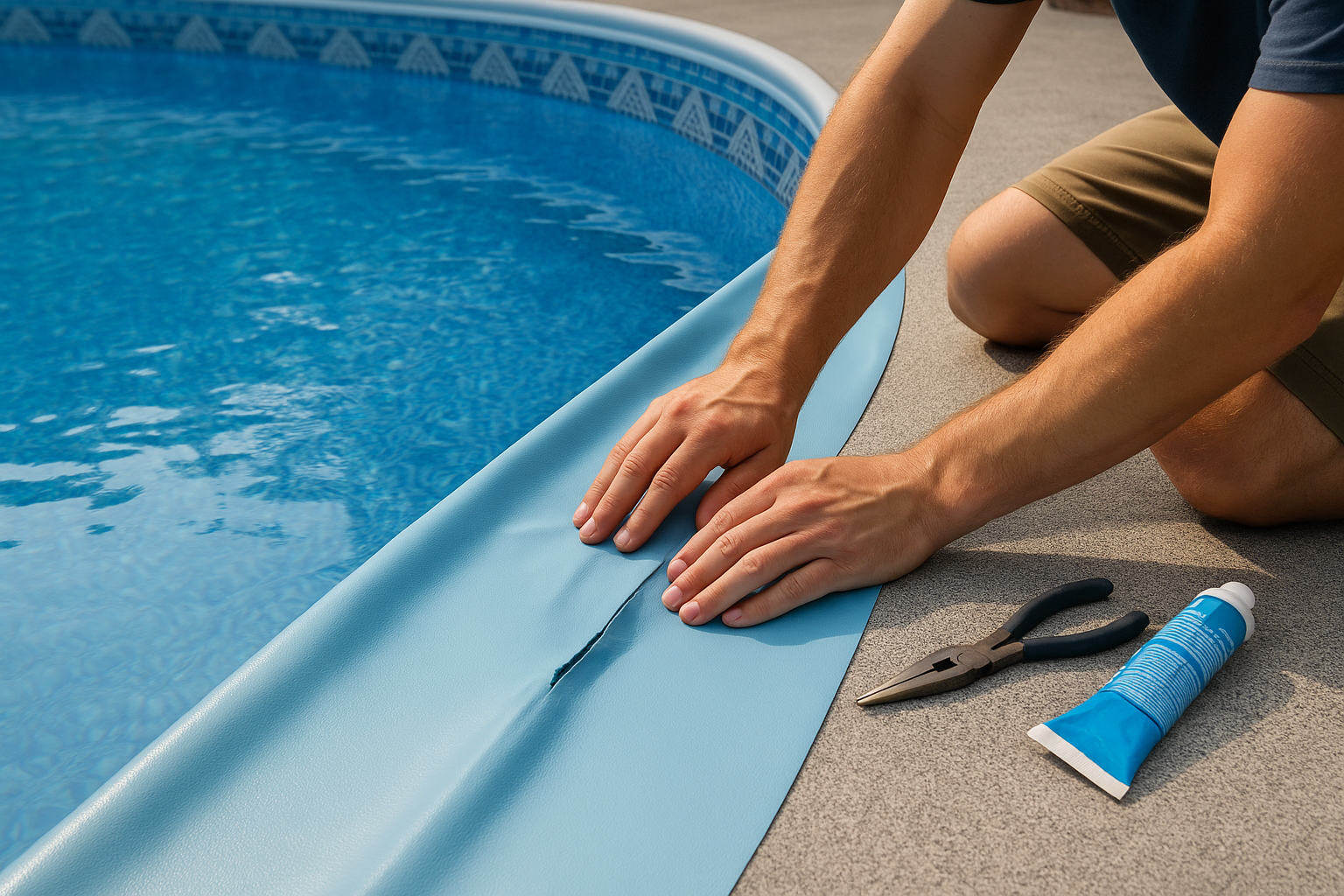
Pool liner leaks can turn a relaxing backyard feature into a frustrating, costly project. While many leaks seem simple at first, pool liner leak repairs often uncover deeper problems that are easy to miss. A patch may stop visible water loss for a while, but if the root cause is not handled correctly, the leak can return or get worse.
Understanding the most common issues with pool liner leak repairs can help you avoid wasted time, repeated fixes, and unnecessary damage. Below, we break down the major problems pool owners face and what to watch for when repairing a liner leak.
Why Pool Liner Leaks Are Hard to Repair
Pool liner leaks are not always as straightforward as a small hole in the vinyl. In many cases, the leak is part of a larger issue involving age, installation, water pressure, or structural movement. Because of that, repairing a liner leak can be more complicated than applying a patch and waiting for it to hold.
- Leaks may be hidden behind wrinkles, seams, or fittings.
- Water loss can come from multiple spots, not just one tear.
- Some leaks only appear when the pool is full, making them hard to isolate.
- Older liners may be too brittle for dependable patching.
Even when a repair seems successful, the liner may continue to fail if the surrounding material is weak or if the source of the leak was misdiagnosed.
Common Problems with Pool Liner Leak Repairs
1. Misidentifying the Leak Source
One of the biggest issues with pool liner leak repairs is locating the actual source of the leak. Water can travel along the liner, behind fittings, or through the pool structure before it becomes visible. As a result, homeowners often patch the wrong area.
- A tear in one section may be caused by pressure from another area.
- Leaks around skimmers, returns, or lights can look like liner damage.
- Small punctures may be overlooked during inspection.
If the real source is missed, the repair will not solve the problem, and water loss will continue.
2. Poor Surface Preparation
Successful vinyl liner repairs depend heavily on clean, dry, well-prepared surfaces. Dirt, algae, sunscreen residue, and biofilm can prevent patch materials from bonding properly. Even tiny debris can weaken the seal.
- Wet or dirty surfaces reduce adhesive performance.
- Improper cleaning can shorten the life of the patch.
- Rushing the prep process often leads to early failure.
For underwater repairs, surface preparation is even more challenging. If the area is not handled carefully, the patch may peel within days or weeks.
3. Using the Wrong Repair Material
Not all patch kits are the same, and choosing the wrong one can create more problems than it solves. Some materials are designed for temporary fixes, while others are better for long-term sealing. Matching the repair product to the liner type and leak location is essential.
- Generic adhesives may not bond well to certain vinyl liners.
- Some patches are too rigid for flexible pool surfaces.
- Cold weather or water conditions can affect curing time and strength.
A mismatched patch may hold for a short time but fail once the liner expands, contracts, or flexes with normal pool use.
4. Patching an Aging or Brittle Liner
Older liners are often one of the most difficult repair situations. As vinyl ages, it becomes thinner, less flexible, and more likely to tear around the repair site. In these cases, a patch may not bond well or may simply create stress in another area.
- Brittle liners can crack around the patch edges.
- Repeated repairs may weaken nearby sections.
- Sun exposure and chemical imbalance speed up liner wear.
If the liner is nearing the end of its service life, patching may only be a temporary solution.
5. Leaks Around Seams and Fittings
Not every leak comes from a puncture in the liner itself. Seams, skimmers, return jets, drains, and light niches are common trouble spots. These areas are exposed to movement and pressure, which makes them more prone to leaks.
- Seam failure can spread beyond the visible break.
- Gaskets and seals may need replacement, not just patching.
- Fitting leaks can mimic liner tears and confuse diagnosis.
Repairing these areas often requires more than a simple patch, especially if the hardware or gasket is compromised.
6. Ignoring Structural or Installation Problems
Sometimes the liner is not the real problem. A pool wall shift, damaged base, poor installation, or settling foundation can cause recurring leaks. If the structure is moving or uneven, the liner may keep stretching and tearing in the same location.
- Improper liner installation can create tension points.
- Foundation movement can stress seams and corners.
- Sharp edges or defects in the pool shell can puncture the liner again.
In these situations, a repair without correcting the underlying issue is usually temporary at best.
How to Improve the Success of a Pool Liner Leak Repair
Although pool liner leak repairs can be tricky, taking the right approach can improve your chances of a lasting fix. Careful diagnosis and realistic expectations are key.
- Test and confirm the exact leak location before patching.
- Clean and prepare the area thoroughly.
- Use repair materials made for vinyl pool liners.
- Inspect seams, gaskets, and fittings as well as the liner itself.
- Consider whether the liner’s age makes repair impractical.
When leaks keep returning, it is often worth having the liner and surrounding pool components inspected by a professional. A trained technician can determine whether the issue is repairable or whether replacement is the more cost-effective solution.
When Pool Liner Replacement May Be the Better Option
There comes a point when repeated patching stops making financial sense. If your liner has multiple leaks, visible wear, or repair failures, replacement may be the smarter long-term choice.
- Frequent leaks usually indicate widespread deterioration.
- Large tears and seam failures are harder to repair reliably.
- A new liner can improve both performance and appearance.
Replacing a failing liner can save time, reduce recurring repair costs, and help prevent water loss from affecting the pool structure.
Conclusion
Pool liner leak repairs can be effective, but they are not always simple. Misdiagnosis, poor prep, aging vinyl, and hidden structural problems can all make a repair fail. By understanding these common issues, pool owners can make better decisions and avoid temporary fixes that lead to bigger headaches later. If the leak keeps coming back, a professional inspection or liner replacement may be the best path forward.