
Problems With Pool Leak Detection Accuracy
Finding a pool leak sounds straightforward, but in real life, leak detection is often less precise than homeowners expect. Pools are constantly exposed to evaporation, weather changes, equipment issues, and shifting ground conditions, all of which can make a normal water loss look like a serious leak. Even with modern tools, pool leak detection accuracy can be affected by several common factors.
If you suspect a leak, it helps to understand why results are not always exact. Knowing the limitations of leak detection can save you time, reduce unnecessary repairs, and help you ask better questions when hiring a professional.
- Not every drop of water loss means there is a structural leak.
- Some testing methods can point to the wrong source.
- Pool conditions often change the accuracy of the results.
Why Pool Leak Detection Is Often Tricky
Pool systems are complex. Water can escape from the shell, plumbing, fittings, lights, skimmers, return lines, pumps, filters, or even accessories like waterfalls and heaters. Because so many parts are involved, leak detection is rarely a one-step process.
Another challenge is that pool water loss does not always happen consistently. A pool may lose more water when the pump runs, when the wind picks up, or when temperatures rise. That makes it hard to compare normal evaporation with an actual leak.
- Multiple leak points can exist at the same time.
- Some leaks only appear under pressure.
- Environmental conditions can mimic leak symptoms.
Evaporation Can Be Mistaken for a Leak
One of the biggest reasons pool leak detection is inaccurate is simple evaporation. Warm weather, low humidity, and strong wind can remove a surprising amount of water from a pool each day. In many cases, this natural loss is mistaken for a plumbing or structural problem.
A pool that seems to be dropping water may actually be behaving normally for the season. This is why professionals often use a bucket test or compare water loss over several days before concluding there is a leak.
- Hot, dry weather increases evaporation.
- Wind speeds up surface water loss.
- Solar blankets and pool covers can reduce confusion, but not eliminate it.
Leaks Can Be Hidden by Pool Design
The shape and construction of the pool can also affect leak detection accuracy. Vinyl liner pools, fiberglass pools, and gunite or concrete pools each have different weak spots. Plumbing lines may run underground, making it difficult to pinpoint the exact location of a leak without specialized equipment.
Some pools also have decorative features, underground returns, or tightly packed equipment pads that make access difficult. In these cases, the water loss may be obvious, but the source can remain hidden.
- Underground lines are difficult to inspect visually.
- Different pool materials fail in different ways.
- Decorative features can create confusing false readings.
Common Causes of Inaccurate Leak Detection Results
Even when the right tools are used, several issues can reduce accuracy. A leak may be misdiagnosed, overlooked, or blamed on the wrong component. That is why a methodical approach is important.
False Positives
False positives happen when a test suggests there is a leak, but the water loss is actually normal or caused by something else. For example, a pressure test might indicate a plumbing problem when the real issue is a loose fitting or worn O-ring. Similarly, dye testing can show movement that is caused by water circulation instead of an actual crack.
- Loose fittings may look like active leaks.
- Circulation currents can move dye away from the true source.
- Temperature changes can affect test readings.
False Negatives
False negatives are just as frustrating. These happen when a leak is present, but the test fails to detect it. Small leaks are especially easy to miss, particularly if they only open under certain pressure levels or when the pool is in use. A leak that occurs intermittently may not show up during a short inspection.
- Hairline cracks can be difficult to spot.
- Intermittent plumbing leaks may not trigger during testing.
- Slow leaks can disappear during brief inspection windows.
Equipment Problems Can Skew Results
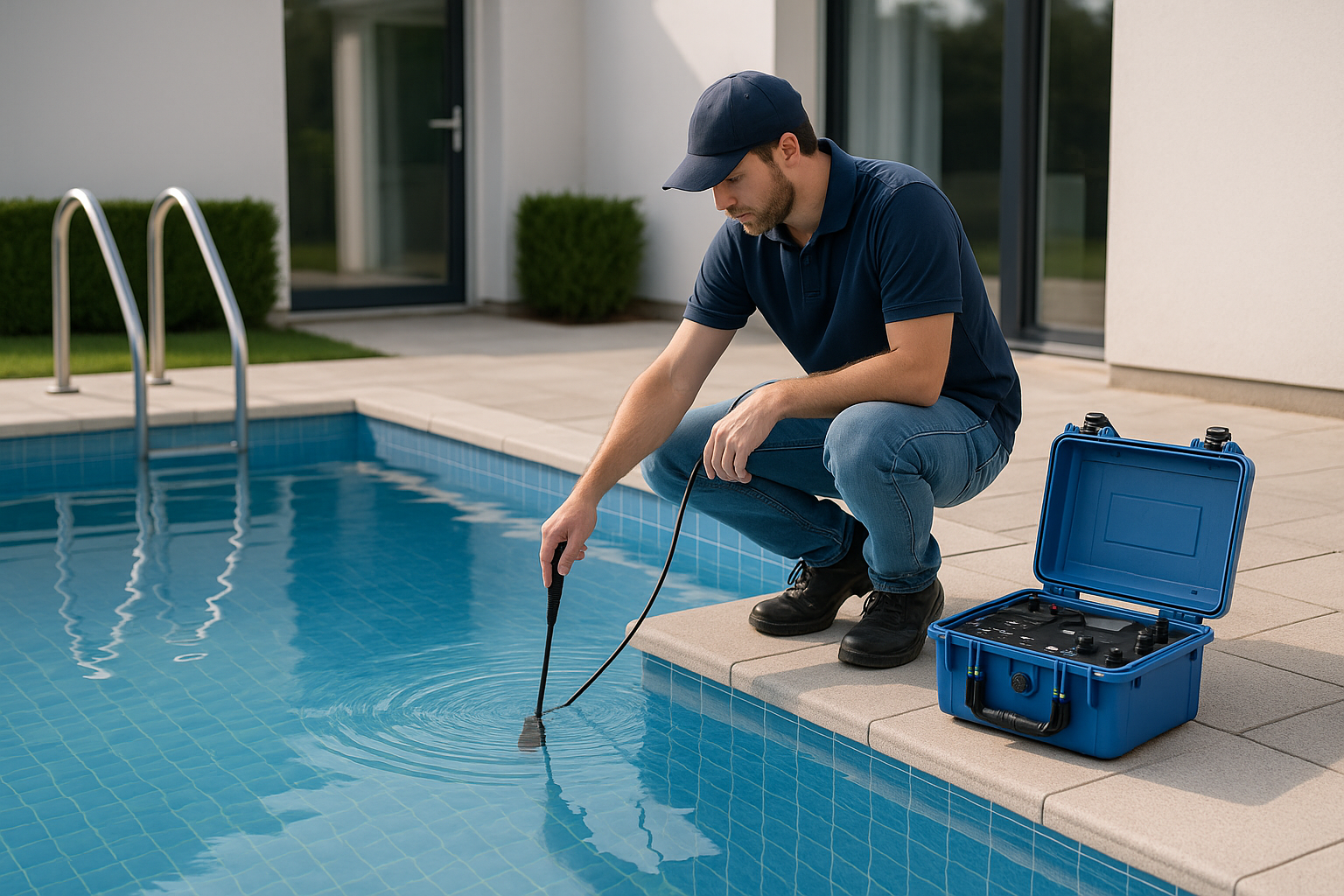
Testing tools need to be calibrated and used correctly. If a pressure gauge is inaccurate, a listening device is too sensitive, or a dye test is performed in moving water, the results can be misleading. Even experienced technicians need the right setup to get dependable answers.
- Poor calibration can distort pressure readings.
- Wind and surface movement can interfere with dye tests.
- Old or damaged equipment can reduce reliability.
How Human Error Affects Leak Detection Accuracy
Human error is another major factor. A technician may overlook a tiny crack, interpret the data too quickly, or stop the inspection before the leak source is confirmed. Homeowners can also make assumptions based on water level drops alone, which may lead to unnecessary repairs.
The best results usually come from a step-by-step process that includes visual inspection, equipment checks, plumbing tests, and careful comparison of water loss over time.
- Incomplete inspections can leave the real problem undiscovered.
- Rushed diagnoses may lead to costly mistakes.
- Assuming one symptom equals one cause can create confusion.
Ways to Improve Pool Leak Detection Accuracy
While no method is perfect, there are ways to improve the chances of finding the right problem. The key is combining observation, testing, and patience. A single test rarely tells the full story.
- Track water loss over several days instead of one afternoon.
- Turn the pump on and off to see whether the leak changes.
- Inspect fittings, skimmers, lights, and visible plumbing carefully.
- Use professional leak detection tools when the source is not obvious.
- Compare test results with weather conditions and pool usage.
If your pool keeps losing water and the source remains unclear, a second opinion can be helpful. Another technician may use different equipment or notice a clue that was missed the first time.
Conclusion
Pool leak detection accuracy is affected by many variables, from evaporation and weather to hidden plumbing issues and human error. Because of that, it is common for leak tests to produce confusing or incomplete results. The best approach is to look at the full picture, use reliable methods, and avoid jumping to conclusions based on one symptom alone. With careful testing and a little patience, you can get closer to the real source of the problem and make smarter repair decisions.